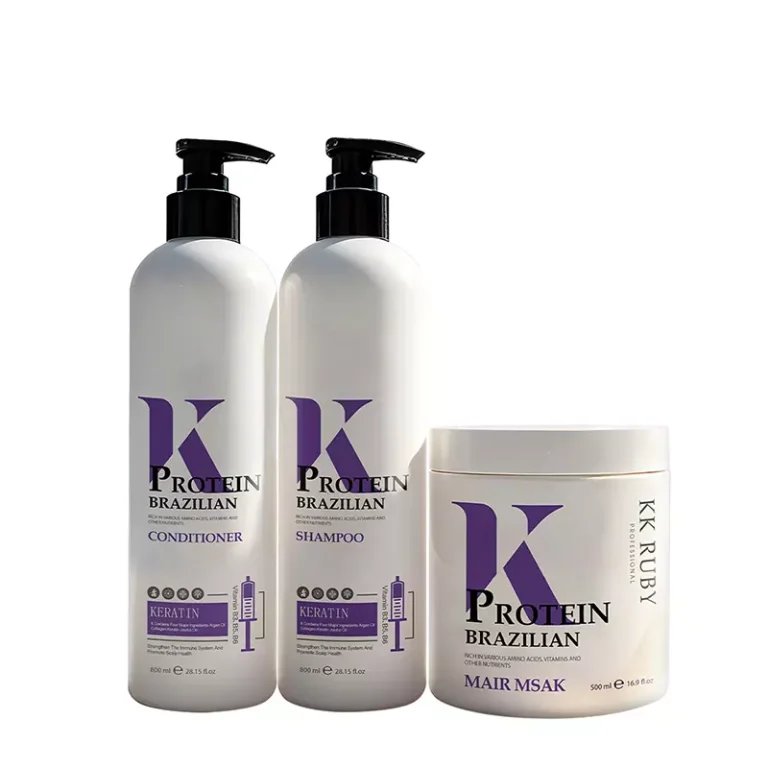
In today’s booming personal care industry, shampoo factories play a crucial role. These highly specialized production facilities are not merely sites for mixing raw materials; they are technological centers integrating R&D, production, and quality control. As consumer demands for shampoo products increase—from basic cleansing to multiple needs like hair care, repair, and scalp treatment—modern shampoo factories must merge chemical engineering, biotechnology, aesthetic design, and sustainability concepts. This article will delve into the comprehensive operations of shampoo factories, revealing the precise manufacturing processes and industry standards behind a bottle of high-quality shampoo.
Core Production Processes in Modern Shampoo Factories
Raw Material Selection and Pre-processing Systems
Truly professional shampoo factories control quality from the source. High-quality factories typically establish strict raw material supplier audit systems, conducting multiple tests on each batch of incoming base materials (surfactants, conditioners, functional additives, etc.). Raw material warehouses maintain constant temperature and humidity to ensure the stability of active ingredients. Pre-processing includes purified water preparation—achieving cosmetic water standards through multi-stage treatments like reverse osmosis and ion exchange; precise weighing and pre-dispersion of solid raw materials; and special storage condition control for temperature-sensitive ingredients.
An advanced factory in Guangzhou disclosed that they set up separate storage areas for different raw materials, implementing a digital “first-in, first-out” management system for key components like silicone oils and cationic conditioners that are susceptible to environmental impact. They also use fully enclosed pipeline transfer systems to minimize potential human contamination.
Precision Batching and Emulsification Technology
This is the core stage of shampoo production. Modern shampoo factories employ computer-controlled batching systems to accurately dispense materials according to formulas validated by the R&D department. The main reaction vessels are usually equipped with multi-layer agitators, homogenizers, and wall scrapers to ensure uniform mixing of high-viscosity materials. Temperature control accuracy can reach ±0.5°C, which is crucial for formulas containing heat-sensitive ingredients (such as plant extracts and protein derivatives).
The emulsification process particularly tests a factory’s technical capabilities. High-quality shampoos require the formation of stable micelle structures to uniformly disperse oily components (silicone oils, plant essential oils) in the aqueous phase. Experienced engineers monitor changes in viscosity, pH, and microstructure. Some premium shampoo factories even use online particle analyzers to monitor emulsion particle size distribution in real time, ensuring the product achieves the designed texture and stability.
Automation and Flexibility in Filling and Packaging
The filling line is often the most significant investment in a factory. Modern shampoo factories filling lines integrate multiple processes such as bottle sorting, filling, capping, labeling, coding, and boxing, with speeds exceeding 100 bottles per minute. To meet diverse market demands, advanced factory filling lines possess quick changeover capabilities, allowing rapid switching between different bottle types and product specifications.
Notably, environmental trends are reshaping the packaging segment. Leading shampoo factories adopt “lightweight” bottle designs to reduce plastic usage; establish in-house preform production workshops to lower carbon footprints; and even provide refill production lines for specific clients. Intelligent packaging lines are also equipped with vision inspection systems to automatically reject products with improper sealing or misaligned labels, ensuring 100% compliance with appearance standards for all outgoing products.
Quality Control: Internal Standard Systems Exceeding National Requirements
Microbial and Chemical Safety Management
Formal shampoo factories establish a three-tier quality control system: raw material inspection, process control, and finished product release. Microbiology laboratories are equipped with clean benches, constant temperature incubators, and other devices to test each batch for total bacterial count, mold/yeast, and pathogenic bacteria. Chemical laboratories use instruments like High-Performance Liquid Chromatography (HPLC) and Gas Chromatography (GC) to analyze active ingredient content, residual impurities, and heavy metal indicators.
In practice, the internal standards of excellent shampoo factories often exceed national regulations. For example, while national standards specify limits for heavy metals, some factories implement stricter screening for potential risk substances like nitrosamines and dioxane in raw materials. They also conduct accelerated stability tests (placing samples at 40°C, -15°C, and under thermal cycling conditions for several months) to predict product performance throughout its shelf life.
Efficacy and Sensory Evaluation Systems
Beyond safety, truly professional shampoo factories establish systematic efficacy evaluation systems. This includes in vitro testing (such as surface tension measurement, foam performance analysis) and clinical testing. Some factories collaborating with research institutions even have volunteer testing panels to conduct blind assessments of product cleansing power, smoothness, scalp irritation, etc.
Sensory evaluation is a key part of shampoo development. Trained evaluators score products across multiple dimensions: texture, fragrance, lathering ability, rinse-off feel, wet combability, and dry hair touch. This subjective evaluation, combined with instrumental data, helps the R&D team fine-tune formulas. For instance, adjusting surfactant ratios or silicone types balances cleansing power with mildness, while fragrance microencapsulation technology can extend scent longevity.
How to Choose a Reliable Shampoo Manufacturing Partner?
Scrutinizing Factory Compliance and Certification Credentials
When searching for a shampoo factory, the first step is to verify the validity of its production license (Cosmetics Production License). Further investigation should determine whether it holds internationally recognized quality management system certifications, such as ISO 22716 (Cosmetics Good Manufacturing Practices) and ISO 9001. Export-oriented shampoo factories should also possess relevant international certifications, like FDA registration and EU CPNP notification.
During on-site visits, observe the factory’s cleanliness, separation of personnel and material flows, and equipment maintenance status. Inquire about its quality incident handling procedures, recall systems, and customer complaint response mechanisms. A well-managed shampoo factory will proactively provide documents like Material Safety Data Sheets (MSDS) and product safety assessment reports.
Assessing R&D Capabilities and Customization Service Levels
Contract manufacturing is not just about production; it’s a technical collaboration. Excellent shampoo factories have independent R&D centers equipped with specialized instruments like rheometers, texture analyzers, and skin testing devices. They can develop custom formulas based on the client’s target market, positioning, and cost requirements, rather than merely offering existing formula options.
Inquire about the factory’s R&D cycle, sampling process, and Minimum Order Quantity (MOQ). Capable shampoo factories can provide “one-stop services” for startup brands, including market trend analysis, competitor research, concept development, formula design, packaging recommendations, and even regulatory consultation. Review their past successful cases, especially collaborations with well-known brands, which directly reflect their technical strength.
Examining Supply Chain Stability and Sustainability Practices
Supply chain disruptions can halt production. Understand whether the shampoo factory has backup suppliers for key raw materials (such as special surfactants, functional additives) and whether it maintains safety stock. In recent years, environmental requirements have become stricter. Pay attention to the factory’s environmental protection facilities (wastewater treatment, exhaust gas treatment), energy management (use of renewable energy), and fulfillment of social responsibilities.
Forward-thinking shampoo factories have begun exploring green chemistry applications, such as using renewable raw materials, developing readily biodegradable formulas, and optimizing production processes to reduce energy consumption. These practices not only align with global sustainability trends but also provide marketing advantages for brands.
Industry Frontier Trends and Technological Innovations
Precision Hair Care and Personalized Solutions
With the popularization of home-use scalp detection devices and genetic testing, shampoo is evolving from “one-size-fits-all” to “precision” products. Advanced shampoo factories are deploying flexible production lines capable of economically manufacturing small-batch, multi-variety products. Microencapsulation and nanocarrier technologies are being used for targeted release of active ingredients—for example, delivering anti-dandruff agents precisely to the scalp surface to reduce irritation to healthy skin.
Some innovative shampoo factories are even exploring “on-demand customization” models: collecting consumer scalp data (oiliness, sensitivity, hair diameter, etc.) in stores or via online questionnaires, then quickly matching or fine-tuning formulas to deliver personalized products within days. This model places extremely high demands on the factory’s R&D database, flexible production, and logistics systems.
Green Factories and Circular Economy Models
Stringent environmental regulations and increased consumer awareness are driving shampoo factories toward “green manufacturing.” This is reflected at multiple levels: using bio-fermentation to produce surfactants, replacing petroleum-based raw materials; developing waterless or low-water formulas to reduce transportation weight and packaging; using recycled plastics or bio-based plastics for packaging; and establishing packaging recycling programs.
More leading shampoo factories practice “industrial ecology,” recycling production by-products. For instance, waste activated carbon from filtration is regenerated and reused; wastewater undergoes advanced treatment for factory greening; and heat recovery systems capture heat dissipation from reaction vessels to heat office areas. These measures not only reduce environmental impact but also lower long-term operational costs.
Deep Integration of Intelligence and Digitalization
Industry 4.0 is reshaping shampoo factories. Sensor networks collect production line data (temperature, pressure, flow rate, etc.) in real time, monitored and optimized through Manufacturing Execution Systems (MES). Artificial intelligence algorithms analyze historical data to predict equipment failures, schedule preventive maintenance, and reduce unplanned downtime.
Digitalization extends to the supply chain: using blockchain technology to trace raw material origins and enhance transparency; employing digital twin technology to simulate new formula production processes in virtual space, optimizing parameters before actual production to reduce trial-and-error costs. Clients can view real-time order progress and quality inspection reports through dedicated portals, achieving full-process visibility.
Conclusion
A seemingly simple bottle of shampoo is the result of precision manufacturing in modern shampoo factories that intersect multiple disciplines like chemistry, engineering, and biology. Excellent shampoo factories are not just production sites; they are centers of technological innovation, bases for quality assurance, and practitioners of sustainable development. Whether brands are seeking partners or consumers want to understand the story behind their products, comprehending factory operations is highly valuable. As technology evolves, future shampoo factories will become more intelligent, green, and flexible, bringing safer, more effective, and personalized hair care solutions to the market while minimizing environmental impact. This seemingly traditional industry is quietly upgrading, powered by technology.