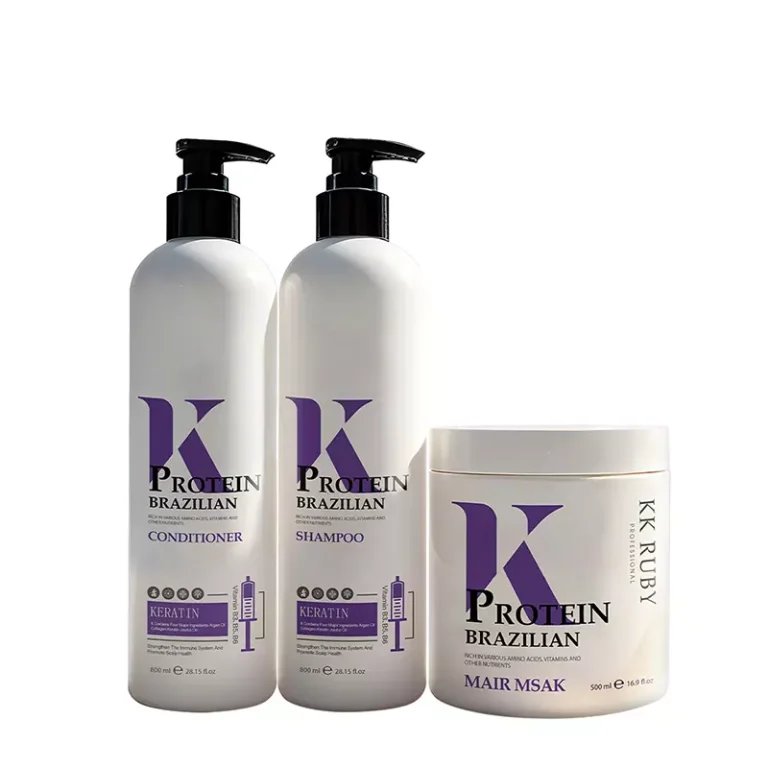
Behind the dazzling array of shampoo products lies a world of precise, professional, and highly regulated manufacturing. Most people only focus on the finished products on the shelves, unaware of how the production processes, quality control, and technological innovations within a shampoo factory directly impact a product’s safety, efficacy, and user experience. This in-depth analysis will take you into the true heart of shampoo manufacturing. Whether you are an industry professional, entrepreneur, or everyday consumer, this knowledge will help you make more informed choices.
The Industry Status and Influence of Shampoo Factories
A shampoo factory is not merely a product assembly line; it is an integrated system combining cosmetic R&D, production quality control, and supply chain management. A high-quality factory typically possesses an independent R&D laboratory, production facilities meeting international standards, and a stringent quality inspection system. Over 70% of global shampoo brands (including many well-known ones) choose to partner with specialized contract manufacturers. This means the production level of the factory directly determines the final quality of products on the market.
Three Key Reasons Consumers Should Pay Attention to Factory Information
First, the production environment determines product safety – there is a fundamental difference between a GMPC (Good Manufacturing Practices for Cosmetics) certified factory and an ordinary workshop. Second, formulation technology affects performance – the same ingredient list can yield vastly different products due to variations in production processes. Third, sustainable development capability – environmentally-friendly factories have a significantly smaller environmental impact throughout the product lifecycle. This information hidden behind the label is key to discerning a product’s true value.
Analyzing the Core Production Process of a Shampoo Factory
Raw Material Selection and Pre-processing Systems
The Transparency Revolution in Raw Material Supply Chains
Modern shampoo factories have established fully traceable raw material management systems. Quality factories do not select suppliers based solely on price but conduct a triple audit for each batch: supplier qualification review, raw material Certificate of Analysis (COA), and practical performance testing. For example, for silicone-based ingredients, factories focus on purity (whether it meets cosmetic-grade standards of >99.9%), viscosity range, and batch-to-batch stability. A transparent supply chain is not just an industry trend but a technical foundation for ensuring product consistency.
Key Technologies in Raw Material Pre-processing
Many assume shampoo production is merely “mixing and stirring,” but the pre-processing stage is often overlooked. Take cationic conditioners as an example: these ingredients require pre-dispersion technology—forming a uniform dispersion with the water phase under specific temperatures (typically 55°C-60°C) and shear force. Otherwise, they can form flocculants in the final product. Plant extracts require microbial control treatment to ensure stable active ingredients while keeping the total microbial count below the international standard of <100 CFU/g. These pre-processing details represent the technical barriers separating professional factories from ordinary production lines.
Formulation Production and Emulsification Processes
The “Hidden Science” of Precise Proportioning and Dosing Sequence
A shampoo’s ingredient list may seem simple, but the dosing sequence and mixing conditions are decisive for the final product. Professional factories follow precise SOPs (Standard Operating Procedures): surfactant bases are fully hydrated first at 70-75°C; silicone-based ingredients must be added slowly under specific shear rates (typically 3000-5000 rpm); and temperature-sensitive components (like botanical actives, fragrances) must be introduced during the cooling phase (<40°C). A common misconception is that “identical ingredients = identical product.” In reality, differences in process parameters can result in completely different products from the same ingredient list.
In-depth Analysis of Emulsification Equipment and Homogenization Technology
Advanced shampoo factories employ vacuum homogenization emulsification systems. The value of this equipment lies not only in mixing but in three major advantages: First, the vacuum environment prevents air bubble incorporation, ensuring a fine product texture. Second, the micron-level shear force generated by the homogenizer head (achieving 0.5-2 μm) forms stable emulsions with hard-to-disperse ingredients like silicones. Third, the fully closed system prevents microbial contamination during production. Compared to traditional open stirring, shampoo produced via vacuum emulsification shows over 3 times greater stability, with minimal risk of separation, precipitation, or efficacy loss during its shelf life.
The Quality Control System of a Shampoo Factory
Real-time Monitoring During Production
Application of Online Quality Inspection Technology
Leading shampoo factories have implemented real-time production data monitoring systems. pH sensors continuously monitor acidity/alkalinity at various stages (quality shampoos should maintain a stable pH between 5.5-6.5); viscometers automatically adjust mixing parameters to ensure consistent batch-to-batch texture; turbidity sensors detect changes in solution clarity. This data is automatically uploaded to a central control system, and any parameter deviation beyond preset ranges (typically ±5%) triggers an alert. Process control superseding final inspection is a core quality philosophy of modern factories.
Laminar Flow Protection for Microbial Control
Microbial control is the most critical challenge in cosmetics production. Professional factory production areas meet Class 100,000 cleanliness standards, with key filling areas even reaching Class 10,000. More advanced facilities employ “RABS isolation systems” (Restricted Access Barrier Systems), where operators perform critical tasks via glove ports without directly contacting the production process. The count of airborne particles ≥0.5μm per cubic meter is continuously monitored to ensure it remains below the international standard of 352,000. This bioburden control capability directly determines the product’s safety after opening.
Finished Product Inspection and Stability Testing
The Real Cost of Full-item Testing
Before a bottle of shampoo leaves the factory, it must undergo at least 23 tests in a compliant factory, including but not limited to: heavy metal content (mercury, lead, arsenic, cadmium), preservative efficacy challenge testing, active ingredient content assay, and packaging compatibility testing. Among these, “stability testing” is often overlooked by consumers—products must endure extreme condition challenges: high-temperature testing at 45°C (simulating 6 months of storage), cycle testing from -15°C to 45°C (simulating transportation temperature variations), and light exposure testing. Only products passing these tests can genuinely guarantee stable quality throughout their shelf life.
The Professionalized Sensory Evaluation System
Beyond instrumental testing, professional factories have sensory evaluation laboratories where trained panels conduct blind tests on each batch. Evaluation dimensions include: foam texture (whether it’s dense and elastic), rinse-off feel (whether it’s smooth without residue), wet comb-ability (degree of tugging reduction), and post-dry feel (whether it’s light and non-greasy), among 8 dimensions. This combined subjective + objective evaluation system ensures products are not only compliant on paper but also deliver a consistently excellent user experience.
Contract Manufacturing Models and Brand Partnerships in Shampoo Factories
The Deep Distinction Between ODM and OEM
Technical Limitations and Advantages of Pure OEM Manufacturing
In the OEM model, the brand provides the complete formula and technical requirements, and the factory is only responsible for production. The advantage lies in strong formula confidentiality, with the brand having full control over the product core. However, the limitation is that the factory only produces per instructions and does not suggest formula optimizations. For startup brands, this could mean missing out on the factory’s technical (accumulated experience)—an experienced factory might know that a certain surfactant performs poorly with local water hardness or that a certain preservative system loses efficiency within a specific pH range.
Value Creation in ODM R&D and Manufacturing
In the ODM model, the factory provides a complete solution from market research, formula development, to production and packaging. The R&D team of a quality shampoo factory analyzes regional market trends (e.g., Asia’s preference for scalp care, Europe’s focus on eco-friendly ingredients) and develops proprietary formula libraries targeting different hair types (fine/limp, coarse/curly, damaged). More importantly, they master ingredient synergy technology—for example, how to maximize conditioning effects while maintaining cleansing power through anionic-cationic compounding techniques. Such specialized expertise is difficult for small brands to acquire independently.
How to Identify a Quality Shampoo Factory
Verification of Production Qualifications and Certification Systems
When selecting a partner factory, qualifications and certifications are merely the basic threshold. Beyond the mandatory Cosmetic Production License, truly quality factories typically hold: GMPC (US/EU standards), ISO 22716 (International Standard for Cosmetics Good Manufacturing Practices), and ISO 9001 Quality Management System certification. More telling are specialized certifications like Halal, Vegan, or Organic certifications, reflecting the factory’s ability to meet specific market demands. Consumers can trace these qualifications through the “Manufacturer Information” on product labels.
Evaluating Technical Indicators of R&D Capability
A factory’s genuine R&D capability can be assessed across three dimensions: First, the quantity and quality of patents (especially invention patents, not design patents). Second, the level of laboratory equipment (whether it possesses analytical instruments like HPLC, mass spectrometers). Third, the ratio of technical personnel (quality factories typically have R&D staff comprising >15% of total employees). Additionally, observe whether the factory participates in industry standard setting, often an indicator of technological leadership.
Four Major Development Trends for Future Shampoo Factories
Whole-Industry-Chain Practice of Green Production
Environmental protection is no longer just a marketing concept but a fundamental transformation at the production end. Leading factories are advancing in four areas: First, using renewable energy (e.g., solar-powered steam systems). Second, implementing water recycling (some factories have achieved up to 80% production water reuse rates). Third, developing biodegradable formulations (using green surfactants like APG). Fourth, adopting sustainable packaging (like PCR recycled plastic, refill station models). These practices not only reduce environmental footprint but also meet growing global consumer demand for sustainability.
Digital Transformation Towards Smart Manufacturing
Industry 4.0 is being implemented in shampoo factories: MES (Manufacturing Execution Systems) track each production batch in real-time; AI visual inspection systems identify filling level errors (with precision up to ±0.5mm); big data analytics predict equipment maintenance cycles; blockchain technology enables end-to-end traceability from raw materials to finished products. Digitalization brings not only efficiency gains but a revolution in quality consistency—minimizing the influence of human subjectivity.
Breakthroughs in Personalized Customization Technology
Traditional mass production is shifting towards flexible manufacturing. Through modular formulation systems, factories can achieve small-batch, multi-variety production on the same line. More cutting-edge is “on-demand customization” technology—consumers determine their hair needs via online tests, and the factory automatically generates personalized formulas based on the data, with minimum order quantities now as low as 1000 bottles. This C2M (Consumer-to-Manufacturer) model will redefine the relationship between shampoo production and consumption.
Scientific Advancement in Efficacy Verification
The core competitiveness of future factories will be efficacy verification capability. Beyond traditional physical/chemical tests, leading factories have established: in vitro efficacy assessments (e.g., using artificial skin models to test soothing effects), clinical testing (partnering with third-party institutions for human trials), and instrumental evaluation (using scalp analyzers, hair tensile testers to quantify effects). Evidence-supported products will become market mainstream, and a factory’s verification capabilities will directly determine a brand’s market credibility.
Practical Advice for Consumers: How to Choose Quality Shampoo Using Factory Information
Decoding Hidden Information on Product Labels
The Importance of Manufacturer Codes
The Manufacturer License Number on Chinese cosmetic labels (format: “Province Abbreviation + Cosmetics License Number”) is key for traceability. Consumers can verify the license’s validity and understand the factory’s licensed production scope via the National Medical Products Administration website. For example, some factories only have a “General Liquid Unit” license, while those with a “Cream/Lotion/Emulsion Unit” license typically have more complete equipment. Also, note if it’s the “Actual Manufacturer”; some brands outsource production but list the parent company’s information, affecting liability tracing.
Inferring Factory Management from Production Date Codes
The batch number system of a professional factory contains rich information: usually the first 1-2 digits represent the production line or workshop, the middle digits are the production date (e.g., “212” means the 212th day of 2021), and the final code indicates the batch sequence. The batch number indicates whether the factory has a comprehensive traceability system. Consumers can try contacting the brand to query information corresponding to the batch number; the response speed and transparency reflect the professionalism of the factory’s backend management.
Inferring Factory Standards Through Product Performance
Observing Details in Texture and Stability
Dispense a coin-sized amount of shampoo onto a clear glass plate and observe texture uniformity—a quality product should be free of particles, air bubbles, and separation. Place the product in different home environments (bathroom, bedroom, balcony) for a week and observe texture changes—products from professional factories should remain stable under varying temperatures and humidity. Also, note batch-to-batch consistency—compare consecutive purchases of the same product for identical texture, fragrance, and effectiveness. This is the most direct method to test a factory’s quality control.
Evaluating Actual Usage Performance
Products from professional factories undergo multi-dimensional testing; consumers can also perform simple home assessments: First, foam test—quality product foam should be dense and elastic, not loose with large bubbles. Second, rinse-off feel—should feel smooth during rinsing but without an “artificial slick” residue feeling afterward. Third, temperature variation response—the product should perform normally under different water temperatures (especially cooler water). These usage details best reflect the factory’s formulation technology and production standards.

Conclusion: The Shampoo Factory – A Bridge Connecting Science and Daily Care
A shampoo factory is far from a simple “mixing and filling workshop”; it is the integrated embodiment of chemical engineering, skin science, quality control, and supply chain management. From the first checkpoint of raw material selection to the final product’s stability testing, every step embodies specialized technology and rigorous standards. As a consumer, understanding this behind-the-scenes knowledge not only helps you choose safer, more effective products but also allows you to truly comprehend the value behind the product label.
Next time you pick up a shampoo bottle, beyond the packaging design and marketing claims, take a minute to check the manufacturer information, production license number, and ingredient list order—these seemingly dry details are precisely the most reliable promise of product quality. In an era of information transparency, consumers who know how to think from the production end will ultimately become a significant force driving industry progress.
For businesses, choosing or building an excellent shampoo factory is not only a guarantee of production capability but also the technological cornerstone for long-term brand development. In a market where consumers are increasingly rational, regulations are tightening, and competition is intensifying, only enterprises that genuinely prioritize production-end development can earn sustained trust and growth amidst change.