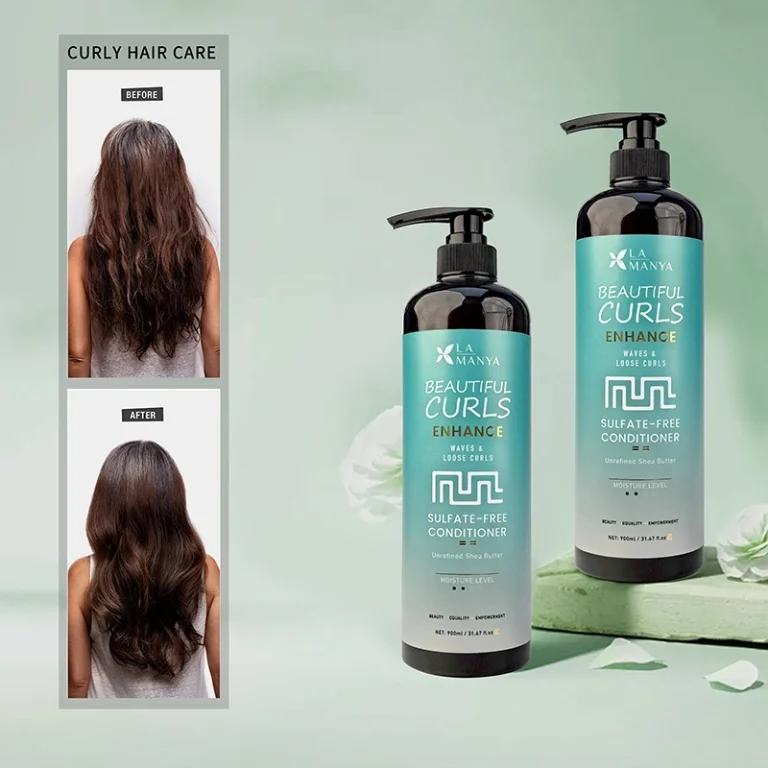
Overview: Why Does Choosing a Shampoo Manufacturer Matter So Much?
Shampoo, as a daily necessity, often has its manufacturers operating behind the scenes. However, the professionalism of the manufacturer directly determines whether a product is truly effective, safe, and offers good value. The global shampoo market has surpassed $80 billion, with China becoming one of the world’s largest producers and consumers. Yet, consumers rarely realize that products within the same price range can have raw material cost differences of over 300% and efficacy variations up to 500%.
Truly professional manufacturers focus not only on cleansing but also delve into scalp microecology, cuticle repair technology, and ingredient penetration rates. This article will take you deep into the shampoo manufacturing industry, explaining how to identify quality manufacturers and how their technological innovations are transforming our hair care experience.
I. The Hidden Truths of the Shampoo Manufacturing Industry
1. The Three-Tier Hierarchy of Manufacturers: Which Level Is Your Product From?
Global shampoo manufacturers can be categorized into three tiers:
Tier 1: R&D-Driven Manufacturers
These manufacturers typically own international R&D centers and hold patented technologies, such as multinational corporations like Coty, Intercos, and Kolmar. They not only provide production services but also invest 5-8% of their annual sales revenue in fundamental research, focusing on cutting-edge areas like scalp microbiome, barrier repair, and targeted delivery systems. Shampoos produced by these manufacturers can have active ingredient penetration rates 2-3 times higher than conventional products.
Tier 2: Formula-Adjusting Manufacturers
This group comprises over 70% of the Chinese market. They possess mature production lines and comprehensive quality control systems but have limited R&D investment (typically 1-3% of sales revenue). They primarily meet client demands by modifying existing formulas, changing fragrances, or packaging, leading to severe product homogeneity, though they offer relatively better cost-effectiveness.
Tier 3: Private Label Workshops
These small factories mainly cater to orders from micro-businesses and influencer brands, competing on ultra-low prices and fast delivery. They typically use publicly available formulas and cheap raw materials, lacking strict quality control. According to industry data, the adverse reaction rate for such products is 6-8 times higher than that of products.
2. The Black Box of Raw Material Costs: Why Price Doesn’t Determine Quality?
For a shampoo bottle priced at $12, its raw material cost can range from $0.30 to $3, entirely depending on the manufacturer’s choices:
Surfactant System Cost Differences:
- Cheap manufacturers use Sodium Lauryl Sulfate (SLS), costing about $1.2/kg
- Quality manufacturers use amino acid-based surfactants, costing $12-$18/kg
- Top-tier manufacturers employ APG Glucoside surfactants, costing over $22/kg
The Real Content of Functional Ingredients:
Many shampoos claim to contain “high concentrations” of active ingredients, but the actual inclusion may be less than 0.1%. Professional manufacturers clearly label the concentration range of key ingredients and use microencapsulation technology to enhance stability. For instance, an effective anti-hair loss shampoo must have its core active (e.g., Minoxidil analogs) concentration above 1% with guaranteed transdermal absorption.
II. Analysis of Core Technologies in Professional Shampoo Manufacturing
1. The Science of Formulation: More Than Just Cleansing
Modern shampoo formulas have evolved from simple cleansers to complex scalp care systems:
pH Balancing Technology:
A healthy scalp pH is around 5.5, while traditional alkaline shampoos (pH 8-9) can damage the scalp barrier. Professional manufacturers use buffer systems to precisely control product pH between 5.0-6.0, maintaining scalp microecological balance. A 6-month clinical test showed that subjects using pH-balanced shampoo experienced a 47% reduction in scalp sensitivity and a 23% decrease in hair shedding.
Micelle Cleansing Technology:
Unlike traditional surfactants, micelle technology forms tiny spherical structures that encapsulate oil and dirt without stripping the scalp’s essential natural lipids. This technology reduces cleansing ingredient usage by 40% while increasing cleansing efficiency by 60%.
2. Production Process Details: Key Steps Determining Quality
Low-Temperature Emulsification Process:
Many active ingredients (e.g., peptides, plant extracts) deactivate at high temperatures. Professional manufacturers use low-temperature emulsification at 30-45°C. Although this reduces production efficiency by 30%, it retains over 95% of active ingredients. In contrast, high-temperature production (75-85°C) causes degradation of more than 40% of active components.
Multi-Stage Filtration and Filling:
Invisible particles can cause scalp irritation. Top manufacturers use three-stage filtration systems (5μm → 1μm → 0.22μm) to ensure no impurities. The filling environment maintains pharmaceutical-grade cleanliness (ISO Class 7) to prevent microbial contamination.
III. How to Choose a Reliable Shampoo Manufacturer?
1. Seven Key Indicators for Identifying Quality Manufacturers
When selecting a shampoo manufacturer, don’t judge solely by price or promises. Evaluate these core indicators:
R&D Capability Assessment:
- Does it have an independent R&D lab and scalp research center?
- Does the R&D team comprise over 15% of total staff?
- Does it hold valid patents related to shampoo?
- Does it regularly publish clinical test data?
Production Certifications:
A quality manufacturer should at least possess:
- ISO 22716 Cosmetic Good Manufacturing Practices Certification
- ISO 9001 Quality Management System Certification
- Specialized certifications like Halal, Organic
- Production environment compliant with FDA, EU, or NMPA standards
Supply Chain Transparency:
Professional manufacturers provide:
- Source and purity certificates for key raw materials
- Third-party test reports (heavy metals, microorganisms, allergens)
- Complete product traceability system
2. Avoiding Common Manufacturer Marketing Traps
“Natural” Doesn’t Equal Safe and Effective
Many manufacturers market “100% natural” products, but natural ingredients can cause allergies and have inconsistent efficacy. Professional manufacturers conduct allergen screening and standardized extraction to ensure safety and consistency.
“Silicone-Free” Might Be a Misleading Claim
Silicones themselves are not harmful and effectively repair hair cuticles. The real issue lies in the molecular weight and type of silicone chosen. Professional manufacturers select appropriate silicone molecular weights based on hair type or employ more advanced film-forming alternatives.
The Truth About Clinical Testing
“Clinically tested” might only indicate safety testing, not efficacy verification. Quality manufacturers provide results from third-party randomized double-blind controlled trials, clearly stating sample size, test duration, and improvement percentages.
IV. Future Trends: Technological Innovation Directions in Shampoo Manufacturing
1. Personalized Customized Solutions
Based on genetic testing and scalp microbiome analysis, manufacturers are beginning to offer “scalp-specific customization” services. By detecting individual scalp type, microbial balance, and follicle health, they create exclusive shampoo formulations. This technology can enhance hair care effectiveness by 200-300% and is currently applied in the high-end market, expected to reach the mass market within 3-5 years.
2. Green Sustainable Manufacturing
Forward-thinking manufacturers are advancing sustainability across multiple dimensions:
- Using 100% recyclable packaging and biodegradable materials
- Implementing water recycling systems, reducing water consumption by 90%
- Developing natural ingredients from food by-products (e.g., apple pomace, coffee grounds)
- Establishing carbon-neutral production lines to reduce emissions
3. Intelligent Efficacy Evaluation Systems
Traditional manual assessments are being replaced by objective measurements:
- Using dermatoscopes and follicle detectors to quantify scalp health
- Employing AI image analysis to track hair growth density and diameter changes
- Utilizing sensors to monitor usage habits and efficacy correlations
Conclusion: Choosing a Manufacturer is Choosing the Future of Scalp Health
Shampoo manufacturers are not just product producers; they are guardians of scalp health. As consumer awareness grows, products relying solely on marketing gimmicks will gradually lose market share, while manufacturers with genuine R&D strength, production standards, and innovative capabilities will become industry leaders.
Next time you choose a shampoo, take a few minutes to understand the manufacturer behind it: Do they invest in real R&D? Are they transparent? Do they pursue long-term value over short-term gains? The answers will determine whether you get a “scented cleanser” or a scientific scalp care regimen.
In an era of increasing transparency, a manufacturer’s professionalism will become a brand’s core competitive advantage. Consumers’ choices will drive the entire industry toward greater specialization, scientific rigor, and responsibility. After all, scalp health is no small matter—it affects not only appearance but also quality of life and long-term well-being.