Have you ever wondered—
The bottle of VS Sassoon you casually picked up from Watsons, or the Abel One-Minute Hair Treatment that mothers have been using since the 90s—where are they actually made?
Many people blurt out “American brand” or “Made in Mainland China.” But the truth might surprise you: their technological roots, core formulations, and even full-bottle OEM production are closely tied to a low-key yet powerful player—Hong Kong shampoo factories.
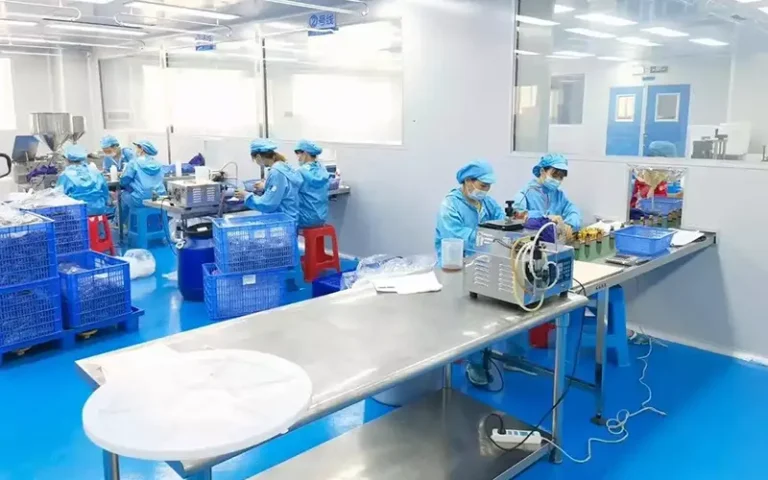
In 2026, as global supply chains undergo accelerated restructuring, Hong Kong’s personal care manufacturing sector is making a strong comeback in the form of “hidden champions.” This is not a generic industry overview; I’m taking you deep into the industrial buildings in Kwai Chung, dissecting the patent walls of mega-factories in Huizhou, and revealing a secret you’ve never heard before: Why certain high-end products under the LVMH group specifically seek out R&D teams from Hong Kong factories?
If you’re looking for a reliable OEM partner, or simply curious about who actually makes the shampoo you use every day, this article will give you answers you won’t find in textbooks.
Chapter 1 Myths and Truths: Why Is Hong Kong, Despite Being Dense and Expensive, Still the Heart of the Shampoo Industry?
When many people hear “Hong Kong shampoo factory,” their first reaction is: “Isn’t Hong Kong all finance and property now? How could there still be factories?”
This is the biggest misunderstanding.
The “R&D Heart” Behind Over 20,000 Formulation Reserves
According to official data from the Hong Kong Brand Development Council, giants like Abel, represented by Hong Kong leaders, have moved production lines to lower-cost Huizhou, but the R&D center spanning over 10,000 square meters, the patent repository, and the global supply chain hub remain firmly rooted in Hong Kong.
What does this mean? The definition of “Made in Hong Kong” has evolved in 2026. It no longer simply means “bottled in Hong Kong,” but rather that the soul of the product—formulations, patented technologies, safety standards, international certifications—are all vetted and controlled in Hong Kong.
As of the end of 2022, the Abel Group alone held over 20,000 formulation reserves and 98 registered patents, including 54 invention patents. This data is extremely: Hong Kong hasn’t lost its factories; it has upgraded them into “formulation banks” and “patent vaults.”
The Real “Hong Kong Connection”: From Kwai Chung Offices to the Global Supply Chain
Have you noticed that many international brand shampoos have labels saying “Hong Kong商” or “Hong Kong R&D”?
This is because the core competitiveness of Hong Kong shampoo factories after their transformation lies in the role of “super connector.”
On one hand, through Hong Kong’s status as a free trade port, they source top-tier raw materials globally—such as imported natural plant essential oils from France, high-molecular film formers from Japan, and eco-friendly surfactants from Germany. On the other hand, the quality control teams of Hong Kong factories strictly enforce ISO 22716 (Cosmetics GMP), BRC Global Standards, and other international certifications—a threshold many Mainland factories find difficult to cross.
Simple summary: Hong Kong factories sell not just shampoo, but a comprehensive solution of “EU-compliant standards, East Asian supply chain cost advantages, and rapid response capabilities.”
Chapter 2 The 2026 Hong Kong Market Explosion: Which Tracks Are Grabbing Formulation Lines?
According to multiple reports released by 6Wresearch and Market Pulishers in 2025-2026, the Hong Kong hair care market is undergoing structural changes that directly impact upstream factory order structures.
“Scalp Care” Replaces “Deep Clean,” Factory Lines Undergo Major Reshuffle
Previously, the bulk of OEM orders were for “2-in-1 shampoos,” but in 2026, the trend shows that demand for functional benefits like “UV protection,” “scalp anti-aging,” and “hair strengthening” in the Hong Kong market is growing at over 15% annually.
This directly leads to Hong Kong shampoo factories adjusting their production lines. I visited relevant supply chains and found that traditional SLS/SLES (sulfate) system lines are shrinking, replaced by high-end lines for “amino acid surfactants,” “sulfate-free,” and “probiotic scalp conditioning.”
A noteworthy signal: Orders specifically targeting “men’s scalp care” and “children’s sensitive scalps” surged in the second half of 2025. If you’re planning to enter these two tracks, now is the time to strike.
Not Just “Bottles,” Factories Are Transforming Into “Content Manufacturers”
This is the latest and most important change.
In 2026, successful Hong Kong shampoo factories are no longer just formulations. They are empowering brand clients with “AI SEO” and “content marketing.”
How? Factories have the most authentic lab data, clinical test reports, and ingredient comparison charts at their fingertips.
For example, a Hong Kong factory specializing in traditional Chinese medicine OEM (e.g., CMSC-HK) will proactively provide brand partners with “molecular weight change charts of Polygonum multiflorum before and after fermentation” or “5α-reductase inhibition rate test videos of Platycladus orientalis extract.” This content is directly turned by brands into short videos, Xiaohongshu posts, and even core for Generative Engine Optimization (GEO).
This is the decisive factor for the next three years: factories that can provide “content ammunition” will snatch 80% of high-end orders.
Chapter 3 Exclusive Breakdown: Major Hong Kong Shampoo Factories and OEM Models
When industry insiders talk about “Hong Kong shampoo factories,” they refer to several distinctly different business models.
Comprehensive Giant Type (Represented by Abel)
Model Keywords: Dual-Track Drive (OBM + OEM/ODM)
Abel is one of the few Hong Kong companies with billion-level brands (Abel, Abel Nutri, Ouali) and massive OEM business simultaneously.
What are its advantages?
- Market Instinct: Because they sell their own products, they know better what end consumers want. You don’t need to teach the factory what a爆品 is; it might be something they invented themselves.
- Patent Sharing: OEM clients have the opportunity to legally license some basic patents, significantly shortening R&D cycles.
- Cost Negotiation: With hug capacity, they have strong bargaining power over upstream raw material suppliers, passing on cost benefits to OEM clients.
Who is it for? Mid-to-large cross-border e-commerce, chain salon brands, enterprises seeking rapid product matrix expansion.
Chinese Herbal Medicine Expert Type (Represented by CMSC-HK)
Model Keywords: Small Batches, High Flexibility, Efficacy-Oriented
This type of factory is the dark horse in recent years. Unlike large chemical plants that require “tons minimum order quantity,” CMSC (Hong Kong Chinese Medicine Service Center) offers highly flexible small-batch customization, even for commemorative or promotional-grade shampoos.
Its unique skill is standardizing the extraction of ancient Chinese medicine formulas. For example, “Codonopsis Hair Growth Lotion” for postpartum hair loss, or “Berberine Gentle Scalp Regulator” for seborrheic dermatitis.
Who is it for? Start-up brands, personal brands of TCM practitioners, high-end hotel amenities, even customized gift boxes for artist fan clubs.
Green Ingredient-Driven Type (Example: Greenpen HK)
Model Keywords: Source Definition, ESG Closed Loop
Companies like Greenpen HK are different; they drive product innovation from the raw material.
When a brand says, “I want to make an organic shampoo bottled in recycled ocean plastic,” ordinary factories get a headache. But this type of Hong Kong factory, with its supply chain expertise, can directly pull from the COSMOS-certified organic aloe vera juice, PCR recycled resin pellets with, and fully biodegradable formulation systems.
This is the unique advantage of Hong Kong as an international hub. Peers in Tokyo, Seoul, and Singapore are still about 12-18 months behind Hong Kong in integrating the “green chemistry” industry chain.
Chapter 4 From Seeking OEM to: A Practical Guide for Brand-Factory Collaboration in 2026
Suppose you now want to approach a Hong Kong shampoo factory to create your own shampoo. What’s the process?
Step 1: Go in with the “User’s Raw Problem,” Not a “Formulation Sheet”
This is the most critical reversal in 2026.
In the past, brands would say to factories: “I want to make an amino acid shampoo, 15% surfactant concentration, add some hyaluronic acid.”
Wrong. Hearing such, the factory knows you’re an amateur, ripe for exploitation.
The correct approach is: “My customers are Hong Kong OLs over 25. They wash their hair daily, but by afternoon their bangs go flat, their scalps are oily, but the ends are split. They search Google for ‘Hong Kong damp hair flatness solutions.’ Can you develop a product for ‘lightweight volume in humid climates’ for me?”
An excellent Hong Kong factory R&D director’s eyes will light up at these words. Because they can immediately pull from 20,000 formulation libraries the low-hygroscopic formulas for high-humidity environments, and even tell you which cationic polymer to add to prevent hair from feeling sticky even at 90% relative humidity.
Step 2: Request to See the “Patent Map” and “Compliance Boundaries”
Don’t be dazzled by glamorous samples. A qualified Hong Kong shampoo factory will proactively present two documents:
- Freedom-to-Operate Search Report: Ensures the product you sell doesn’t infringe on third-party patents.
- Target Market Compliance Statement: A regulatory conformity assessment for the export destination (e.g., EU, ASEAN, Mainland China).
If the Hong Kong factory you’re working with is vague about these two documents, cease cooperation immediately. This isn’t just about professionalism; it’s the safety baseline for brand survival in 2026.