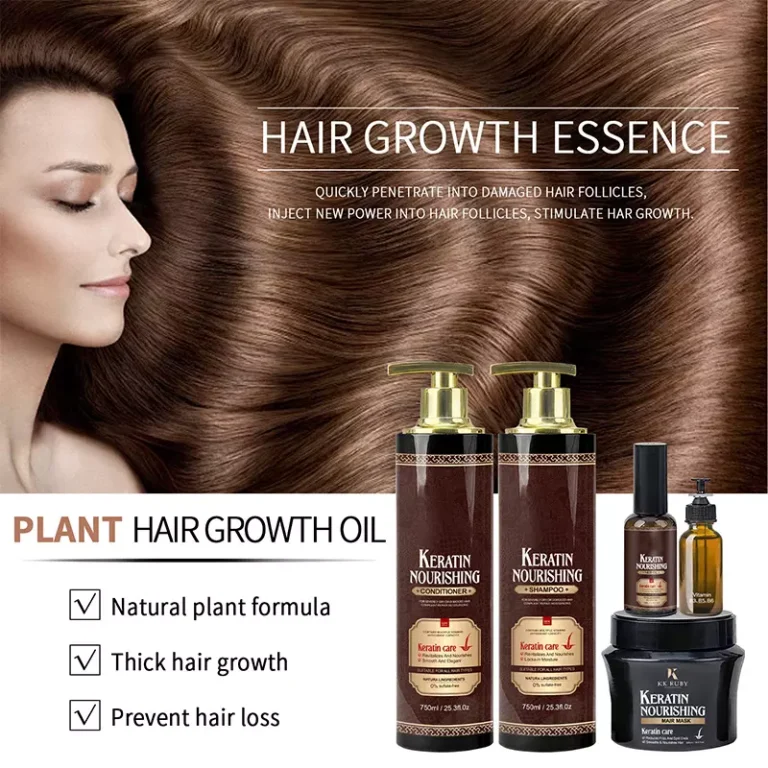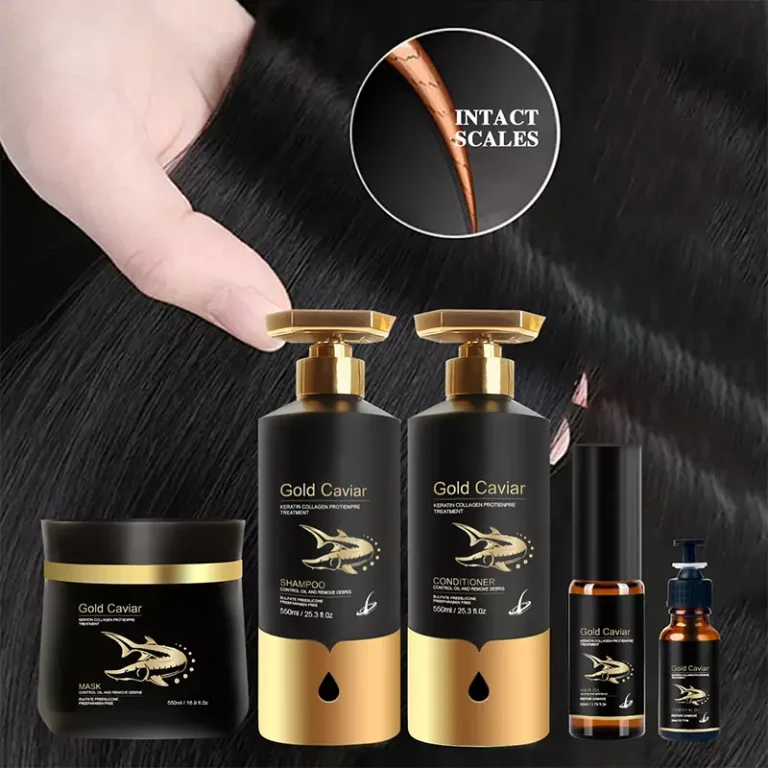
Let’s be honest for a second. You’re looking at the haircare market—a multi-billion dollar industry that literally never sleeps—and you’re thinking, “I want a piece of that.” And why shouldn’t you? Whether you’re an influencer with a loyal following, a salon owner tired of pushing someone else’s brand, or an entrepreneur spotting a gap in the clean-beauty space, launching your own shampoo line is one of the highest-margin moves you can make.
But here is the reality check: you don’t need to be a cosmetic chemist, and you definitely don’t need to drop five million dollars building a high-tech laboratory. The secret weapon behind almost every successful indie haircare brand you see blowing up on TikTok or dominating Sephora shelves? A top-tier private-label shampoo manufacturer.
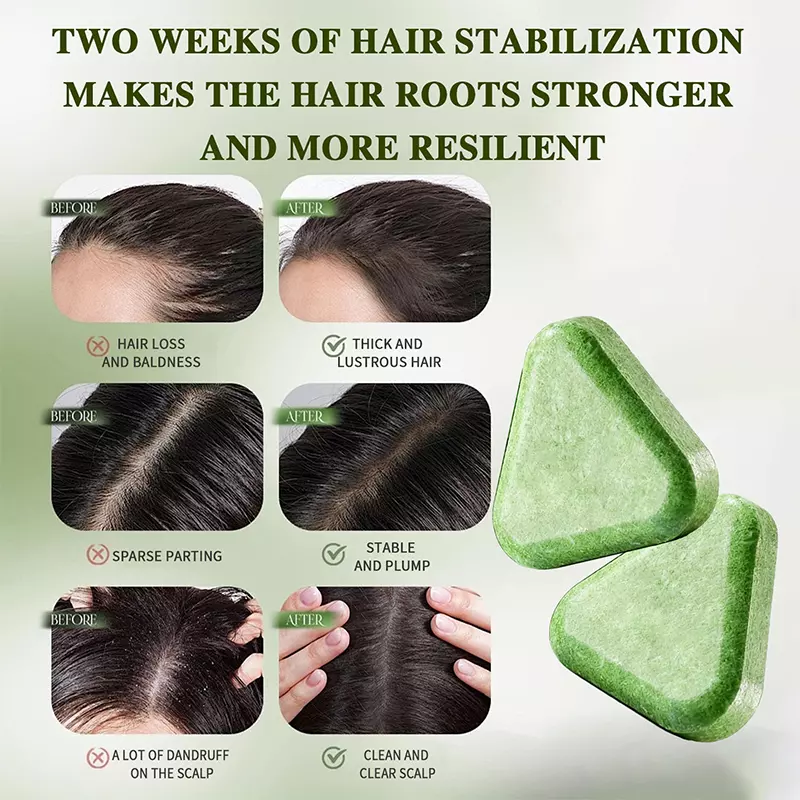
This isn’t just about slapping your logo on a cheap, generic bottle of soap. The industry has evolved. Today, working with the right factory means accessing award-winning, salon-grade formulations that are ready to go, fully compliant, and proven to sell. Let’s dive deep into exactly how to navigate this world, avoid the expensive rookie mistakes, and build a product that your customers will obsess over.
Ready to skip the guesswork and start building your custom haircare line today? Let’s chat about your vision and get some high-quality samples in your hands. Reach out directly on WhatsApp +86 134 8026 8601 for a free, no-nonsense consultation.
Why Partnering with a Private-Label Shampoo Manufacturer is a Total Game-Changer
If you want to build a brand, your time is your most valuable asset. Spending eighteen months trying to figure out how to mix surfactants and preservatives in your garage is a massive waste of that time. Here is why the private-label route is the ultimate cheat code for modern brands.
Skipping the R&D Headache (and the Heavy Costs)
Research and development (R&D) in cosmetics is notoriously brutal. If you start from scratch (custom formulation), you’re paying a chemist thousands of dollars just to create a recipe. Then comes stability testing. Will the shampoo separate after three months? Will the color change if it sits in a hot warehouse? Does the preservative system actually stop mold from growing?
A reputable private-label shampoo manufacturer has already done this heavy lifting. They have a library of “base formulas” that have undergone rigorous stress testing. These formulas have been baked in ovens, frozen, and tested for microbial growth. By choosing a pre-developed private-label formula, you bypass months of agonizing trial and error and save tens of thousands of dollars in laboratory fees. You get a product that is guaranteed to be stable, safe, and effective from day one.
Speed to Market: Launching Faster Than the Competition
Trends in the beauty industry move at warp speed. Right now, rosemary oil for hair growth might be trending; six months from now, it could be fermented rice water. If you take two years to launch, you’ve missed the wave entirely.
When you leverage a private-label partner, your timeline shrinks drastically. Because the formulas are already created, tested, and legally compliant, your main focus shifts simply to selecting your packaging and designing your labels. Instead of a 12-to-18-month grind, a solid factory can take you from initial concept to having physical, retail-ready products sitting in your warehouse in as little as 4 to 8 weeks. In the business of consumer goods, speed is profit.
Decoding the Formulation Process: What Actually Goes Into the Bottle?
You don’t need a PhD in chemistry, but if you’re going to sell shampoo, you need to know what makes a good shampoo. Consumers are smarter than ever. They read ingredient labels. They use apps to scan barcodes for toxins. If your product is packed with cheap fillers, they will know, and they will leave a devastating review.
The Clean Beauty Movement: Sulfate-Free, Paraben-Free, and Vegan
Let’s talk about the elephant in the room: sulfates. For decades, Sodium Lauryl Sulfate (SLS) was the go-to ingredient because it creates that massive, foamy lather people love, and it’s incredibly cheap for the factory. The problem? It strips the hair of its natural oils, wreaks havoc on color-treated hair, and irritates the scalp.
Today’s consumer demands sulfate-free options. A high-quality private-label shampoo manufacturer will offer advanced, gentle surfactant systems—like Sodium Cocoyl Isethionate (derived from coconuts) or Decyl Glucoside. These ingredients cost slightly more, but they provide a luxurious, creamy lather without the damage. Furthermore, you need to ensure your partner can provide paraben-free preservative systems and guarantee that the formulas are 100% vegan and cruelty-free. If a factory tries to push old-school, harsh chemical bases on you, run the other way.
Active Ingredients That Actually Sell: Biotin, Keratin, and Argan Oil
The base of the shampoo cleans the hair, but the hero ingredients are what sell the bottle. Your private-label partner should offer a wide variety of infusions so you can target specific hair concerns.
- For Hair Loss/Thinning: Look for formulas spiked with Biotin, Caffeine, and Rosemary Extract.
- For Damage Repair: You want Hydrolyzed Keratin, Silk Amino Acids, and Bond-Building technologies.
- For Deep Hydration: Argan Oil, Jojoba Oil, and Hyaluronic Acid are non-negotiable.
The beauty of private labeling today is the ability to take a proven base formula and “tweak” it slightly by adding a specific hero ingredient or a signature fragrance. This gives you a unique selling proposition (USP) in the market without triggering the need for a full, ground-up stability test.
Want to know which active ingredients are currently dominating the market and driving the highest retail margins? We can guide you through the best-selling formulations. Message us right now on WhatsApp +86 134 8026 8601 and let’s build a product your customers will crave.
Red Flags and Green Flags When Vetting a Shampoo Factory
Let’s get tactical. Finding a manufacturer on Google is easy; finding one that won’t screw you over is the hard part. The industry is full of middlemen posing as actual factories, and if you partner with a trading company instead of the direct source, you’re instantly giving away 20% to 30% of your profit margin. Here is how to thoroughly vet your potential partner.
MOQ (Minimum Order Quantity) Reality Checks
The biggest hurdle for new brand owners is the MOQ. Massive, multi-national factories might demand an MOQ of 20,000 to 50,000 units per SKU (flavor/scent). Unless you have massive venture capital funding or a guaranteed distribution deal with Target, that is financial suicide. You do not want your cash tied up in 50,000 bottles of shampoo sitting in a garage.
On the flip side, beware of “factories” offering an MOQ of 50 units. Usually, these are just people buying bulk jugs from wholesale clubs and filling bottles by hand in an unsterilized room.
The sweet spot? Look for a highly capable private-label shampoo manufacturer that offers a reasonable entry-level MOQ—typically around 500 to 1,000 units for standard stock packaging and private label formulas. This allows you to test the market, validate your branding, and generate cash flow before placing the massive 10,000-unit freight orders.
Certifications That Actually Matter (GMP, ISO, FDA Compliance)
Do not take a manufacturer’s word for it when they say their facility is “clean.” You need hard proof, because the liability ultimately falls on you, the brand owner.
- GMP (Good Manufacturing Practice): This is absolutely non-negotiable. GMP certification ensures the factory follows strict hygiene, quality control, and tracking protocols. It means they test the water purity daily, sanitize the vats between batches, and keep retain samples of your product just in case there’s an issue later.
- ISO 22716: This is the international standard specifically for cosmetic manufacturing. If they have this, you’re in excellent hands.
- Regulatory Compliance: The factory must know how to provide an SDS (Safety Data Sheet) and an INCI (International Nomenclature of Cosmetic Ingredients) list for your labels. If you plan to sell in the US, the facility should ideally be FDA-registered, or at least fully versed in MoCRA (Modernization of Cosmetics Regulation Act) compliance.
If you ask for their GMP certificate and they stall, ghost them immediately.
Packaging and Branding: Making Your Shampoo Pop on the Shelf
You can have the greatest, most luxurious, hair-transforming liquid in the world, but if it comes in an ugly, cheap-looking bottle, absolutely no one is going to buy it. In the beauty space, people buy with their eyes first. The packaging is the product until the customer actually gets in the shower.
Custom Bottles vs. Stock Options
When dealing with a private-label shampoo manufacturer, you generally have two routes for packaging:
- Stock Packaging: The factory has a catalog of pre-sourced bottles (cylinders, boston rounds, tottles) that they buy in massive quantities. The Pros: Fast lead times, low MOQs, and no tooling fees. The Cons: Your bottle shape might look similar to another brand’s.
- Custom Packaging: You design a unique mold for your bottle. The Pros: You get a 100% unique silhouette that stands out on the shelf. The Cons: High minimums (often 10,000+ units just for the bottles), expensive mold fees, and long lead times (add 6-8 weeks to your timeline).
For 90% of new brands, high-end stock packaging is the right move. You differentiate the product not with a crazy bottle shape, but through premium label design, high-quality pumps (do not cheap out on the pump—if it breaks, the customer will hate your brand), and the finish of the plastic, such as a soft-touch matte finish on a standard PET bottle.
Label Design and Legal Compliance: Don’t Get Sued
Designing a label isn’t just about picking a cool font and a nice color palette. It’s a legal document. Your private-label partner should assist you in ensuring your artwork meets local regulations.
Your labels must clearly state the net weight (in both ounces and milliliters), the exact INCI ingredient list (in descending order of concentration), the manufacturer or distributor details, and proper warning statements.
Beyond compliance, think about the material. Shampoo lives in the shower. If you print your beautiful branding on standard paper labels, they will disintegrate into a soggy, peeling mess after three days of hot water. You absolutely must insist on BOPP (Biaxially Oriented Polypropylene) labels or waterproof vinyl with a laminate finish. Another premium option is silk-screen printing directly onto the bottle, which looks incredibly high-end and never peels, though it usually requires a slightly higher MOQ.
Struggling to figure out the right bottle shape, pump style, and waterproof labeling for your brand? We provide turnkey solutions from the liquid inside to the premium packaging outside. Drop us a message on WhatsApp +86 134 8026 8601 to see our full packaging catalog.
The Financials: Pricing, Margins, and True Profitability
Let’s talk money. You are starting this business to generate serious revenue. The biggest mistake new brand owners make is only looking at the “cost per bottle” quoted by the factory and assuming that’s their final number. To build a sustainable haircare business, you must understand your landed costs and how to price for retail.
Calculating Your True Cost Per Unit (Landed Cost)
When a private-label shampoo manufacturer quotes you “$2.50 per unit,” you need to know exactly what is included. Does that include the shampoo, the bottle, the pump, the label, and the labor to apply the label? Usually, yes. But it does not include shipping.
Shampoo is heavy. It’s essentially shipping water. If you are ordering 2,000 bottles of 16oz shampoo, you are moving a literal ton of liquid. Your Landed Cost is the cost of the goods PLUS the freight cost, customs duties, and delivery to your warehouse or a 3PL (Third Party Logistics) center.
If the factory charges $2.50 per bottle, and freight shipping costs $0.75 per bottle, your actual Landed Cost is $3.25. Always run your profit margins based on the $3.25 number, never the $2.50 number.
Scaling Up: How Volume Impacts Your Bottom Line
The beauty of the manufacturing industry is the economy of scale. The more you buy, the cheaper it gets.
Let’s look at a realistic scenario for a premium, salon-grade, sulfate-free shampoo:
- At 500 units: You might pay $4.00 per landed bottle. If you retail it for $24.00, you have an $20 gross profit per bottle. Excellent margin.
- At 5,000 units: Your factory costs drop because they are mixing a larger vat, and your freight costs drop because you are shipping by sea pallets instead of air express. Your landed cost might drop to $2.20 per bottle. Now, you are making $21.80 per bottle.
This is why starting with a reasonable private-label run is smart. You use the slightly lower (but still fantastic) margins of the 500-unit run to prove the concept, get customer reviews, and dial in your Facebook/TikTok ads. Once the formula is a proven winner, you scale up the volume, slash your cost of goods sold (COGS), and dramatically increase your profit margins.
Step-by-Step Guide to Launching Your Shampoo Line Today
Okay, you understand the strategy, you know the ingredients, and you know how the money works. How do you actually get started without feeling overwhelmed? Here is the exact, step-by-step roadmap to go from idea to physical product using a private-label partner.
Step 1: Requesting Samples and Extensive Testing
Never, ever sign a bulk contract or send thousands of dollars without testing the product first. Any legitimate private-label shampoo manufacturer will gladly send you samples of their base formulas.
When you get the samples, don’t just sniff them. You need to stress-test them in the real world.
- The Wash Test: Wash your hair with it. Have your friends with different hair types (curly, straight, fine, thick, color-treated) wash their hair with it. Does it lather well? Does it rinse clean? Does the hair feel stripped or hydrated afterward?
- The Scent Test: Fragrance is highly subjective, but it’s often the #1 reason a customer repurchases. Is the scent too overpowering? Does it smell cheap and synthetic, or does it have complex, essential-oil-like notes?
- The Viscosity Check: Is the shampoo too watery? Does it slip through your fingers before you can get it to your scalp? Or is it too thick to pump out of the bottle easily?
Evaluate these samples ruthlessly. If the factory’s standard formula needs tweaking—maybe you want it a bit thicker, or you want to swap the lavender scent for a sandalwood vanilla—tell them. A good factory will make those micro-adjustments for you.
Don’t guess what your product will feel like. Experience it yourself. We ship high-quality, pre-formulated samples globally so you can test the lather, scent, and results before committing. Hit us up on WhatsApp +86 134 8026 8601 to request your sample kit today.
Step 2: Finalizing the Contract and the Production Timeline
Once you have approved the golden sample, it’s time to pull the trigger.
- Select Packaging: Choose your bottle, pump, and cap from their catalog.
- Submit Artwork: Your designer sends over the label files. The factory should provide a “die-line” (the exact digital template of the bottle) so your designer knows the exact dimensions.
- The Proforma Invoice (PI): The factory will send you a PI. Standard industry terms are usually a 30% to 50% deposit upfront to begin production, and the remaining 50% to 70% balance due before the goods ship. Never pay 100% upfront to a factory you are working with for the first time.
- Production Kicks Off: The factory will order raw materials, mix the bulk liquid, run quality control tests on the vat, fill the bottles, apply the labels, and pack them into master cartons. A standard lead time for private label is 4 to 6 weeks.
- Quality Control and Shipping: Before paying the final balance, ask the factory to send you photos and videos of the finished, labeled products sitting in the boxes. If you are doing a massive order, you can even hire a third-party inspection company to visit the factory and check the goods. Once approved, you pay the balance, and your brand is loaded onto a truck or a ship.
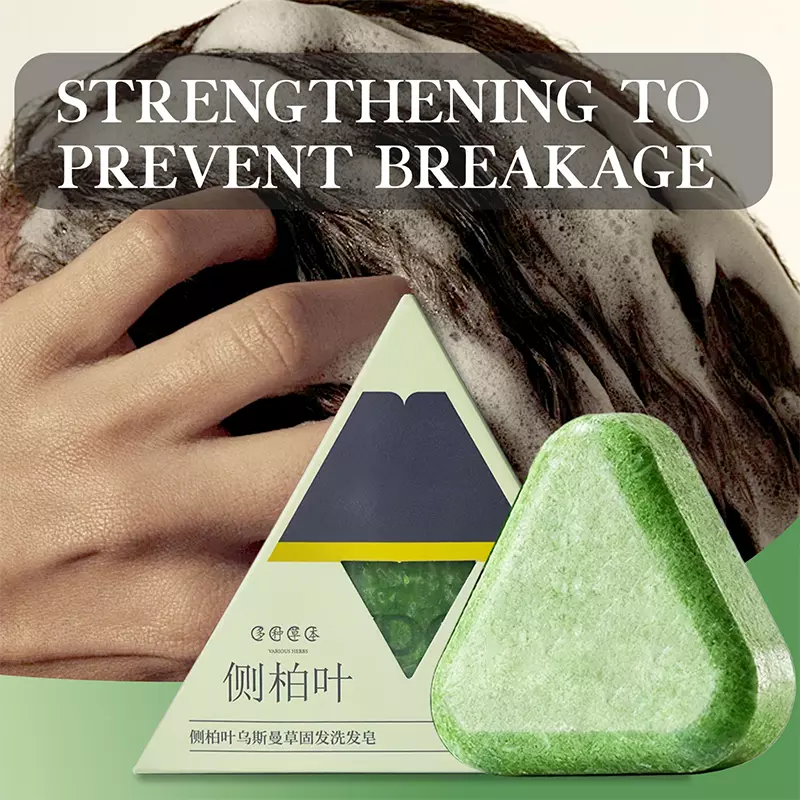
Building Your Brand is Just a Conversation Away
The haircare market isn’t slowing down. People will always wash their hair, and consumers are actively moving away from massive, faceless drugstore conglomerates in favor of niche, independent brands with a story, clean ingredients, and killer aesthetics. There is space on the shelf for you.
The barrier to entry has never been lower, but the requirement for quality has never been higher. By partnering with a dedicated, highly certified private-label shampoo manufacturer, you eliminate the operational nightmares of production and free yourself up to do what you do best: market your brand, build your community, and drive sales.
Stop overthinking the formulation process and trying to reinvent the wheel. The formulas are ready. The bottles are ready. The only thing missing is your brand’s logo on the front.
Ready to turn your haircare concept into a physical product that generates real revenue? Stop putting it off. Let’s map out your product line, discuss pricing, and get your brand into production. Contact our factory direct on WhatsApp +86 134 8026 8601 right now. We handle the manufacturing; you handle the scaling. Let’s get to work.