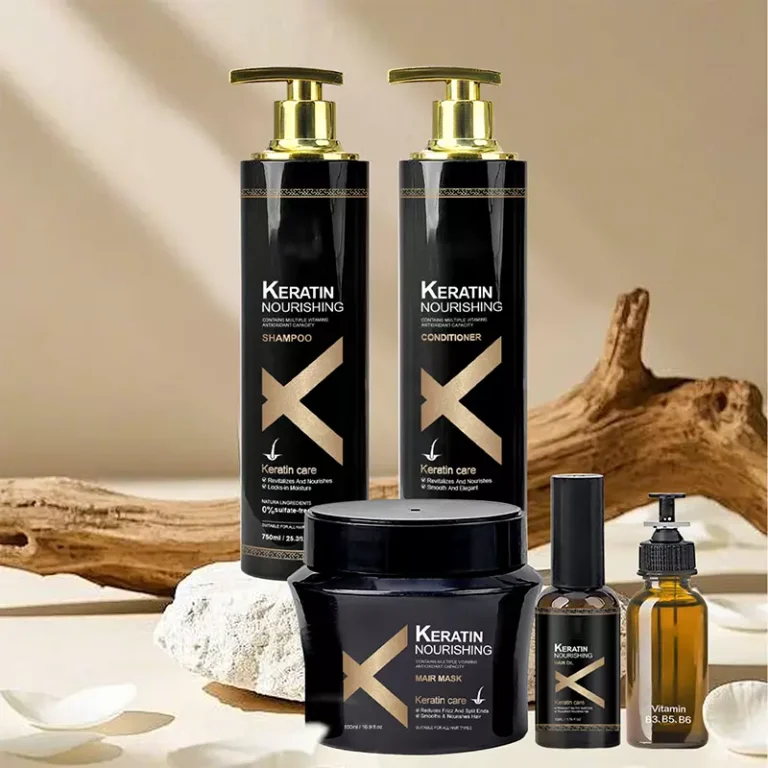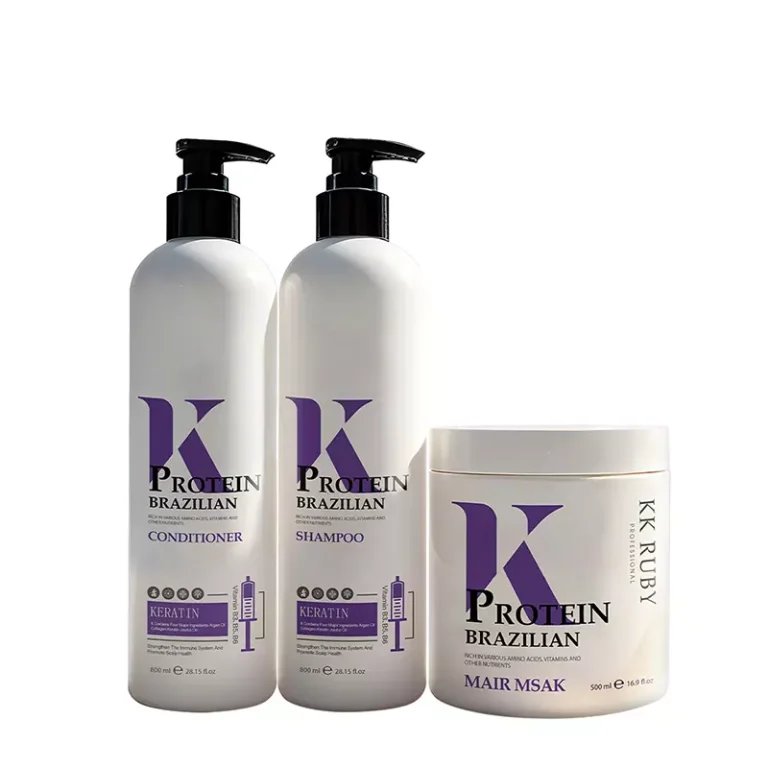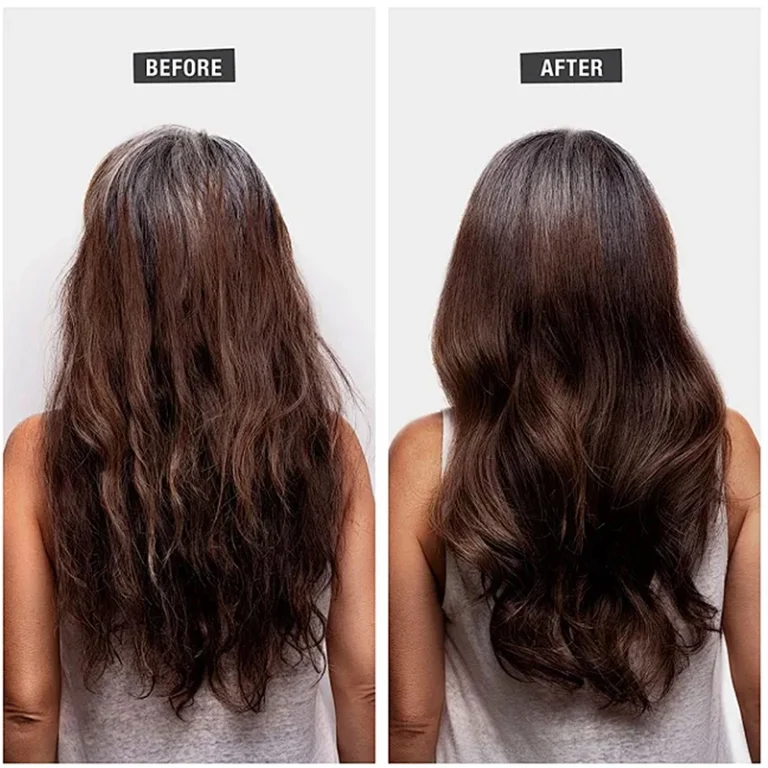
Have you ever paused during your morning shower to look at the liquid in your palm and wonder how it actually came to be? We often take shampoo for granted, seeing it as a simple household staple. However, the journey from raw ingredients to that perfectly viscous, fragrant, and effective cleanser is a marvel of modern industrial chemistry and precision engineering.
For leading brands, this journey is orchestrated within a high-tech cosmetic factory. To understand what makes a product stand out on a crowded shelf, we need to look behind the curtain at a facility like Jindao Shampoo OEM Manufacturer. With over 120,000 square meters of production space and a legacy of innovation, they provide the perfect lens through which to view the professional shampoo manufacturing process.
Phase 1: Research, Development, and the “Perfect Formula”
Every great shampoo begins not in a vat, but in a laboratory. The shampoo manufacturing process starts with a specific goal: Is this product for oily hair? Is it a “Spartan” root activator? Is it a “Polar” dye shampoo?
At Jindao, the R&D team manages a database of over 10,000 mastered formulas. Chemists must balance four primary components:
- Surfactants: The cleansing agents that trap dirt and oil.
- Conditioning Agents: Ingredients like silicones or polyquaterniums that leave hair smooth.
- Active Ingredients: Botanical extracts (like ginger or red onion), proteins (keratin), or vitamins.
- Aesthetics: The fragrance, color, and pearlizing agents that make the shampoo pleasant to use.
Once a formula is perfected on a small scale, it undergoes rigorous “stability testing.” This ensures the shampoo won’t separate, change color, or grow bacteria when sitting in a warm bathroom for six months.
Phase 2: Water Treatment – The Foundation of Quality
It might surprise you to learn that the primary ingredient in almost every shampoo—often making up 70% to 80% of the bottle—is water. However, you cannot use tap water in a professional cosmetic factory.
Tap water contains minerals like calcium and magnesium that can interfere with the chemistry of the surfactants. The first physical step in the shampoo manufacturing process at a facility like Jindao is advanced water purification. Using Reverse Osmosis (RO) and Deionization, the factory produces “Ultra-Pure Water.” This ensures that the final product is consistent and that the active ingredients can perform at their peak without interference.
Phase 3: The Mixing and Emulsification Stage
Once the water is purified, the “big cook” begins. This takes place in massive, stainless steel mixing vessels that can hold thousands of liters.
The process is more complex than just stirring. It requires a specific sequence:
- Heating: The water is often heated to around 70°C to help solid ingredients (like waxes or certain conditioners) melt and blend evenly.
- Sequential Addition: Ingredients are added in a specific order. If you add the fragrance too early while the mix is too hot, the scent will evaporate. If you add thickeners too fast, you get clumps.
- High-Shear Mixing: To ensure a smooth, “creamy” texture, the mixture is subjected to high-shear homogenization. This breaks down oil droplets into microscopic sizes so they stay perfectly suspended in the water base.
Phase 4: Quality Control (QC) and pH Balancing
Before the liquid can move to the bottling line, it must pass a strict “mid-process” inspection. In a GMPC-certified facility like Jindao Shampoo OEM Manufacturer, the lab checks every batch for:
- Viscosity: Is the shampoo too “runny” or too thick to squeeze out of the bottle?
- pH Level: Human hair and scalp have a natural pH of about 4.5 to 5.5. The shampoo must be balanced (often using citric acid) to ensure it doesn’t irritate the skin or damage the hair cuticle.
- Microbial Testing: Samples are checked to ensure the environment remained sterile during the mixing process.
Phase 5: Automated Filling and Packaging
Once the batch is “cleared” by the lab, it is pumped into the filling lines. This is where the sheer scale of a manufacturer like Jindao becomes apparent. With over 100 automated production lines, the speed is incredible.
- Bottle Cleaning: Empty bottles are blasted with ionized air to remove any dust.
- Precision Filling: Sensors ensure that every bottle receives the exact milliliter count required—no more, no less.
- Capping and Sealing: High-speed robotic arms apply caps and, if necessary, induction seals to prevent leaking during shipping.
- Labeling: Pressure-sensitive labels are applied with laser-guided accuracy.
Phase 6: Logistics and Global Distribution
The final step of the shampoo manufacturing process is getting the product to the consumer. For an OEM (Original Equipment Manufacturer), this means preparing the goods for international shipping.
Whether the brand is based in the United States, Europe, or the Middle East, the products are palletized and tracked. Because Jindao is a massive hub in Guangzhou, they have the logistical infrastructure to move millions of units per month across the globe.
Why the Choice of Manufacturer Matters
For a brand owner, understanding the shampoo manufacturing process is essential because it highlights where things can go wrong. A small, uncertified factory might skip the expensive water purification step or fail to perform stability testing, leading to “bad batches” that can ruin a brand’s reputation overnight.
By partnering with Jindao Shampoo OEM Manufacturer, brands benefit from:
- Scalability: The ability to move from a small pilot run to a million-bottle order seamlessly.
- True Customization: The freedom to ask for specific, high-end ingredients like Caviar extract or Moroccan Argan oil without worrying about the technical difficulty of blending them.
- Compliance: Knowing the product meets global safety standards (GMPC/ISO) automatically.
Conclusion: Science in Every Drop
The next time you reach for your favorite shampoo, remember that it is the result of a meticulously controlled scientific process. From the initial R&D in a quiet lab to the high-speed roar of the 100+ production lines at Jindao Shampoo OEM Manufacturer, every step is designed to ensure that the product is safe, effective, and delightful to use.
In the beauty industry, the “inside” of the bottle is just as important as the “outside” label. By mastering the complex shampoo manufacturing process, world-class manufacturers empower the next generation of hair care brands to thrive.