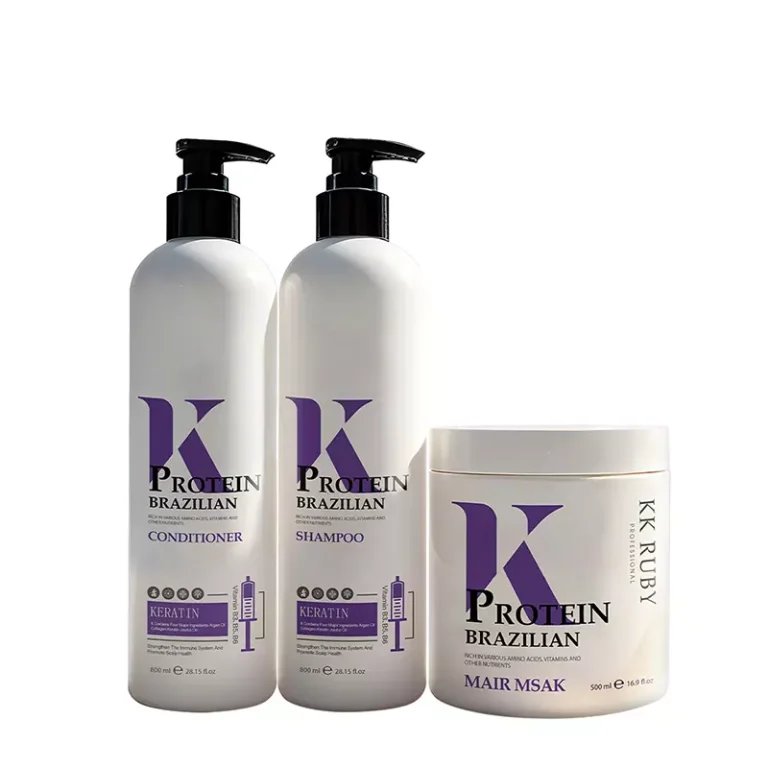
Shampoo factories are no longer simple mixing and stirring workshops but modern production bases integrating fine chemicals, biotechnology, and intelligent manufacturing. As consumer demands for hair care products have increased—from basic cleansing to hair repair, scalp health, and even personalized customization—the production systems of shampoo factories have undergone revolutionary upgrades.

Core Competitiveness of Modern Factories
Today’s leading shampoo factories consider R&D innovation capabilities, lean production systems, and strict quality control standards as their three pillars. These factories not only operate clean rooms compliant with GMP (Good Manufacturing Practice) but have also established fully digitized management systems covering the entire chain from raw material traceability to finished product delivery. A seemingly simple bottle of shampoo in the hands of consumers is the crystallization of hundreds of patented technologies, precision instrument testing, and rigorous scientific formulations.
Industry Trends and Challenges
The global shampoo market is rapidly evolving toward natural ingredients, sustainable packaging, and personalized formulations. This requires factories to possess the ability to respond quickly to market changes, balancing large-scale production advantages with flexible small-batch customized production. Increasingly stringent environmental regulations are also driving continuous innovation in wastewater treatment, energy utilization, and carbon footprint management.
The Precision Manufacturing Process of Shampoo Production
Raw Material Selection and Preprocessing System
High-quality shampoo begins with strictly screened raw materials. Modern factories have established multi-level raw material evaluation systems:
Scientific Balance of Natural and Synthetic Ingredients
R&D teams in advanced shampoo factories thoroughly evaluate the characteristics of each raw material. While natural ingredients like plant extracts are popular, they present challenges such as stability, allergenicity, and batch variability. Advanced factories address these issues through microencapsulation technology, standardized extraction processes, and stability testing to ensure natural ingredients are both effective and safe. Meanwhile, the selection of synthetic ingredients like surfactants is trending toward gentler, biodegradable types, such as amino acid surfactants and glycoside surfactants.
Four-Level Defense in Raw Material Quality Control
Leading factories have established a four-tier raw material inspection system: supplier audits, arrival sampling tests, comprehensive laboratory analysis, and pre-production small-scale trials. Particularly for active ingredients, factories employ instruments like High-Performance Liquid Chromatography (HPLC) and Gas Chromatography-Mass Spectrometry (GC-MS) for quantitative analysis to ensure the active substance content of each batch meets formulation requirements. Fermented ingredients provided by biotechnology companies also require microbial limit testing and efficacy validation.

Emulsification Process and Production Equipment Innovation
The core production process of shampoo is emulsification, which directly determines the product’s texture, stability, and user experience:
Working Principles of Intelligent Emulsification Systems
Modern shampoo factories use computer-controlled emulsification systems equipped with high-shear emulsifiers and homogenizers. Temperature, stirring speed, and ingredient addition sequences are precisely controlled by programs, with error margins not exceeding ±1°C and ±5 RPM. This precision ensures the perfect formation of micelle structures, allowing active ingredients to remain stable within the system. Some factories have also introduced online viscosity monitoring and automatic pH adjustment systems for real-time process optimization.
Selection Strategy Between Cold and Hot Processing
Factories scientifically choose production processes based on formulation characteristics. Hot processing (70-85°C) is suitable for solid ingredients and wax-based raw materials requiring thorough dissolution; cold processing (room temperature) is used to protect heat-sensitive ingredients like vitamins, probiotics, and certain plant extracts. Advanced factories have achieved flexible production line switching between the two processes, allowing adjustments based on different product requirements within the same facility.
Automated Filling and Packaging with Sustainability
The filling stage is a direct reflection of a factory’s production efficiency and technical capabilities:
Technical Details of Fully Automated Filling Lines
Modern shampoo filling lines achieve full automation from bottle cleaning and sterilization, quantitative filling, capping, and sealing to labeling and coding. Using dual metering systems with mass flow meters and gravity filling, filling accuracy can reach ±0.5%. Vision inspection systems reject products with skewed labels, loose caps, or unqualified liquid levels. A high-speed filling line can process over 12,000 bottles per hour while maintaining a product qualification rate above 99.5%.
Sustainable Packaging Solutions
Environmental pressures are driving packaging innovation: factories increasingly use bottles made from PCR (Post-Consumer Recycled) materials to reduce virgin plastic usage; develop refill designs where consumers retain the outer bottle and purchase refill pouches; and research biodegradable packaging materials. Additionally, factories optimize bottle designs to reduce material usage and employ lightweighting technologies to decrease plastic usage in 250ml shampoo bottles by 15-20%.
The Scientific Framework of Quality Control Systems
Microbial Safety and Preservation Systems
As water-based products, microbial control is paramount in shampoo quality management:
Multi-Barrier Preservation Strategy
Modern factories employ “hurdle technology” to build multiple preservation barriers: including selecting appropriate preservative combinations, controlling water activity (Aw value), adjusting pH to ranges unfavorable for microbial growth, and microbial control during production. Factories no longer rely on single strong preservatives but instead use synergistic effects of multiple mild preservatives to ensure product safety while reducing irritation.
Environmental Monitoring and Clean Room Management
GMP-standard workshops utilize 100,000-class or 10,000-class air purification systems, with regular monitoring of settling bacteria, airborne bacteria, and surface microorganisms. Critical operation areas like filling rooms and emulsification tank feeding ports are equipped with local 100-class laminar flow hoods. Factories implement continuous deionization treatment and microbial control for production water to ensure compliance with cosmetic water standards.
Stability Testing and Efficacy Verification
A bottle of shampoo undergoes rigorous testing before reaching the market:
Scientific Methods for Accelerated Stability Testing
Factories place samples in constant temperature and humidity chambers at 40°C±2°C and 75%±5% relative humidity for 3-6 months of accelerated testing, simulating 1-2 years of normal storage conditions. Additionally, freeze-thaw cycle testing (-10°C to 40°C alternation), light exposure testing, and centrifugation testing are conducted to evaluate product stability under extreme conditions. Only products passing these tests proceed to the next stage.
Clinical Efficacy Evaluation System
High-end shampoo factories establish comprehensive efficacy evaluation laboratories, validating product effects through both instrumental analysis and volunteer testing. Common tests include: hair tensile testing for strength and resilience, sebum testing for oil control evaluation, and scalp scanning for microcirculation and stratum corneum analysis. For anti-hair loss products, 3-6 months of human trials are required, using standardized photography and hair counting methods to assess effectiveness.
R&D Innovation and Customization Capabilities
Formula Database and Modular Development
Facing rapidly changing markets, leading factories have established efficient R&D systems:
Platform-Based Formula Development Strategy
Factories deconstruct shampoo formulas into basic cleansing modules, conditioning modules, active efficacy modules, and sensory modification modules. Each module offers dozens of validated options, allowing R&D personnel to quickly assemble new formulas like building blocks based on client needs. This modular development shortens the new product development cycle from the traditional 6-12 months to 1-3 months.
Flexible System for Customized Production
Factories provide multi-level customization services for different client groups: from basic color and fragrance customization, to intermediate ingredient replacement and texture adjustment, to advanced completely innovative formula development. Small-batch production lines enable customized production with minimum orders of 500 bottles, meeting the needs of emerging brands and region-specific products.
Green Chemistry and Sustainable Development Innovation
Environmental trends are shaping factory R&D directions:
Breakthrough Applications of Biotechnology Ingredients
Beauty peptides produced through fermentation engineering, green surfactants synthesized via enzymatic catalysis, and rare plant active ingredients obtained through plant cell culture—these biomanufacturing technologies are transforming the sources of shampoo ingredients. Compared to traditional extraction methods, biotechnology ingredients offer better sustainability, consistency, and purity.
Water-Saving Formulas and Easy-Rinse Technology
Factory R&D teams are committed to developing “low water consumption” shampoo products: by optimizing surfactant combinations to enable rich lather and thorough rinsing with less water; developing concentrated formulas to reduce water content during transportation; and adding rinse-aid components to shorten rinsing time and water usage. Laboratory tests show that advanced formulas can reduce rinsing water usage by approximately 30%.
Industry Future and Factory Transformation Directions
Intelligent and Digital Transformation
Shampoo factories are progressing from automation to intelligence:
Digital Twin and Predictive Maintenance
Advanced factories create digital twin models of production lines, simulating and optimizing production parameters in virtual space before applying the best solutions to physical production lines. IoT sensors collect real-time equipment data, and AI algorithms analyze equipment wear trends to achieve predictive maintenance, reducing unplanned downtime by over 70%.
Blockchain Traceability and Transparency Building
Some leading factories are beginning to apply blockchain technology for full-chain traceability from raw material farms to finished product shelves. Consumers can scan QR codes to view product information such as ingredient origins, production dates, inspection reports, and carbon footprint data. This transparency enhances brand trust, particularly appealing to younger consumers’ focus on product authenticity.

Personalization and Precision Hair Care Trends
Future factories will move closer to meeting individual consumer needs:
On-Demand Production and Personalized Formulations
Based on consumer scalp detection data (sebum secretion, pH, microbial community, etc.), factories can provide personalized formulation services. Small-batch flexible production lines combined with AI formulation systems enable customized shampoos for different scalp types. Some innovative factories have begun offering “subscription-based” personalized shampoo services, adjusting formulas according to seasonal changes and consumer feedback.
Scalp Microbiome Balance Product Development
Latest research indicates a close relationship between scalp health and microbial community balance. Future factories will develop more prebiotic, postbiotic, and probiotic shampoo products to address issues like dandruff, itching, and excessive oiliness by regulating the scalp microbiome. Such products demand higher requirements for production environments and preservation systems, driving further technological upgrades in factories.
The shampoo manufacturing industry is undergoing a profound transformation from traditional chemicals to biotechnology and digital manufacturing. A modern shampoo factory is not merely a production site but a technology hub integrating R&D innovation, lean manufacturing, and sustainable development. For brands, partnering with such factories means gaining core capabilities to respond quickly to market changes, ensure product quality, and achieve differentiated competition.
For consumers, understanding the science behind shampoo manufacturing not only aids in making more informed purchasing decisions but also provides deeper insight into product value. The next time you pick up a bottle of shampoo, consider the modern factory behind it—a fusion of countless technologies and craftsmanship.