I. The Role Evolution of Contemporary Shampoo Manufacturers: From OEM to Innovation Partner
1. Market Landscape Transformation and Manufacturer Status Upgrade
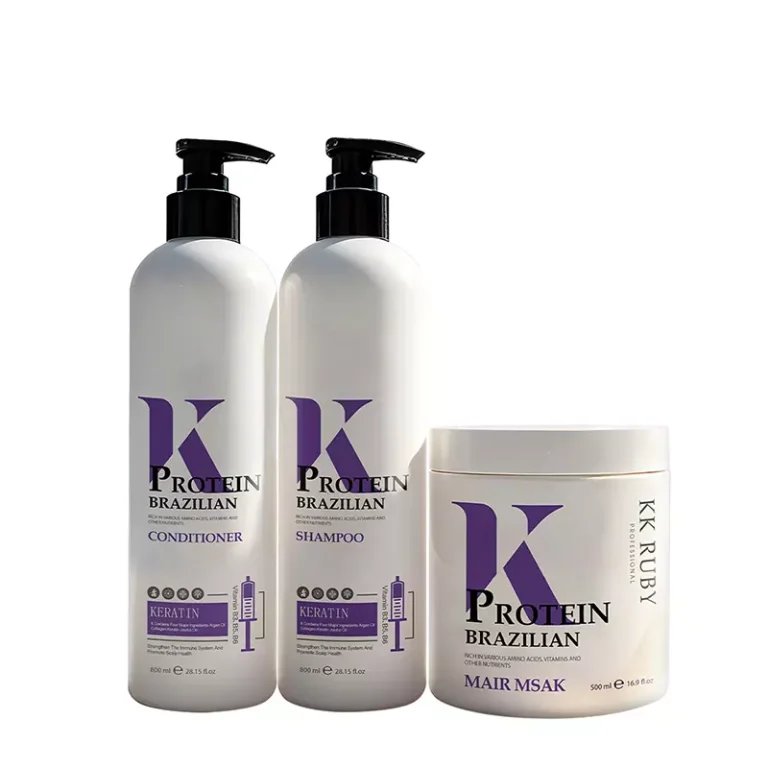
As the global shampoo and hair care market surpasses the hundred-billion-dollar mark, the role of shampoo manufacturers is undergoing a fundamental transformation. Traditionally perceived as mere “contract workshops” executing brand formulas, today’s leading manufacturers have transformed into full-chain solution providers. This shift stems from the refinement of consumer demands—from basic cleansing functions to diversified needs such as scalp health management, ingredient transparency, personalization, and sustainability.
Top manufacturers establish innovation laboratories equipped with advanced devices like scalp microbiome analyzers and 3D hair cuticle scanners, enabling them to provide brands with preemptive services such as market trend prediction, formula innovation, and efficacy verification. For example, a leading Asian manufacturer invests 8% of its annual revenue in R&D, holds over 200 patents, and can simulate 12 different scalp environments for product testing. Such deep R&D capabilities make it an irreplaceable strategic partner for brands.
2. Digital Technology and Smart Manufacturing Reshape Production Paradigms
Modern shampoo manufacturing has fully embraced the Industry 4.0 transformation. Smart production lines use IoT sensors to monitor the viscosity, pH, and active ingredient stability of each batch of raw materials in real time, ensuring product consistency exceeds 99.7%. More notably, the application of flexible manufacturing systems enables “small-batch, multi-batch” production—a European manufacturer, for instance, can handle customized production with a minimum order of just 500 bottles, breaking the traditional cosmetic industry barrier of 10,000 bottles minimum.
Data platform systems integrate the entire chain from raw material traceability to end-user feedback: by scanning a QR code on the packaging, brands can view production progress in real time, while consumers can trace the ingredient source of each shampoo bottle. This transparent supply chain not only meets regulatory requirements but also serves as a powerful marketing tool for premium brands, realizing a new “manufacturing-as-marketing” model.
II. Seven Core Evaluation Dimensions for Choosing a Shampoo Manufacturer
1. In-Depth Analysis of Technical Strength and R&D Capability
The true differentiation among manufacturers lies in fundamental research capability. Evaluation should focus on three levels: first, basic research—whether they possess accumulated expertise in fields like scalp physiology and hair science; second, applied development—their ability to stably incorporate new ingredients (e.g., CBDA cannabidiolic acid, microbiome-friendly materials) into formulations; and finally, testing and validation—their clinical testing credentials and efficacy evaluation systems.
Take a manufacturer with ISO 22716 certification as an example: it has established a complete three-tier R&D structure. The basic research institute focuses on technology reserves for 5 years ahead, the applied development department handles product conversion for 2-3 years, and the technical support department addresses immediate production issues. This structure enables it to provide differentiated formulas for 30 brands simultaneously, reducing the new product development cycle from the industry average of 180 days to just 90 days.
2. Comprehensive Examination of Production Compliance and Quality Systems
In an era of tightening global regulations, compliance capability is the lifeline for manufacturers. Top manufacturers typically hold a triple certification matrix: ISO 22716 (Cosmetics Good Manufacturing Practices), ISO 9001 (Quality Management Systems), and market-specific certifications (e.g., FDA registration, EU CPNP notification). However, certifications are merely the threshold; real differentiation lies in daily execution.
One manufacturer innovatively implemented a “Quality Traceability Cube” system: the time dimension can trace batch records up to 10 years back, the spatial dimension can pinpoint specific production line stations, and the logical dimension links to test reports from raw material suppliers. When customer complaints arise, root cause analysis can be completed within 2 hours. This极致 quality control maintains product defect rates below 0.03%, far lower than the industry average of 0.5%.
III. Deep Collaboration Strategies: Co-creating Value with Manufacturers
1. Formula Development Practices Under Collaborative Innovation Models
The relationship between successful brands and manufacturers has evolved beyond the “client-vendor” model into a co-creation laboratory ecosystem. In practice, brands provide market insights and consumer profiles, while manufacturers contribute technical expertise and implementation pathways. For instance, when a emerging brand presented the challenge of “oily scalp with dry ends,” the manufacturer developed a “zone-release” shampoo using triple-encapsulation technology—cleansing ingredients activate immediately on the scalp, while conditioning ingredients release only in the weak acidic environment of hair ends.
During collaborative development, intellectual property co-management mechanisms are crucial. Forward-thinking manufacturers typically offer three cooperation models: fully exclusive formulas (brand exclusive), partially shared (manufacturer can use foundational technology in other fields), and open innovation (results enter the manufacturer’s technology library). One domestic brand’s “2+3” agreement with a manufacturer stipulates: exclusive formula rights for the first 2 years, with allowance for manufacturer use in non-competing categories from year 3—balancing innovation exclusivity with R&D cost sharing.
2. Advanced Methods for Supply Chain Optimization and Cost Control
Mature collaboration should not focus solely on unit prices but establish a full lifecycle cost model. After partnering with a manufacturer, an international brand restructured its cost framework across four dimensions: joint procurement at the raw material end reduced surfactant costs by 18%; optimized filling line speed matching at the production end decreased changeover losses by 23%; implementing a “production warehouse + sales warehouse” two-tier network at the logistics end cut distribution costs by 15%; most crucially, demand forecasting algorithms compressed safety stock from 45 days to 28 days.
More forward-looking collaboration involves carbon footprint co-management. An eco-brand co-established a “green production line” with a manufacturer, using bio-electricity and recycled packaging water to reduce per-bottle shampoo carbon footprint from the industry average of 280g CO₂e to 190g. This data not only became a highlight in the brand’s ESG report but also generated actual revenue through carbon trading markets, achieving dual value in sustainability and profitability.
IV. Industry Outlook: Three Future Trends in Shampoo Manufacturing
1. Commercial Breakthroughs in Personalization Technology
The era of “one formula per person” is accelerating. Leading manufacturers are already pursuing three customization paths: first, ingredient modularization, deconstructing shampoo into 30+ functional modules (cleansing base, efficacy additives, fragrances, etc.), with consumers generating personalized formulas after online diagnostics; second, packaging personalization, where digital printing enables custom labels per bottle, with minimum orders now as low as 50 bottles; most revolutionary are biomarker-responsive products that intelligently adjust ingredient release profiles based on detected scalp microbiome or hormone levels.
A manufacturer’s “smart dispensing station” developed with a tech company is already deployed in high-end malls: after scalp analysis, robotic arms complete blending and filling within 15 minutes, with labels displaying personal names and customization dates. Although currently costly, with microfluidic technology advancements, the premium for personalized products could drop from the current 300% to 50% within 5 years, truly entering the mass market.
2. Systemic Transformation Toward Sustainable Manufacturing
Sustainability has deepened from a marketing concept into systematic engineering at the manufacturing end. Pioneering manufacturers are implementing a “5R Manufacturing Closed Loop”: Reduce—concentrated formulas decrease single-use dosage by 40%; Reuse—developing refillable metal bottles with 10-year lifespans; Recycle—single-material packaging boosts recyclability to 95%; Renewable—ensuring plant-based ingredients exceed 80% by 2025; and most innovative, Refill systems—over 2,000 smart shampoo refill stations already established in Europe.
One manufacturer’s “zero-waste factory” practice is even more enlightening: production wastewater undergoes triple treatment for landscape irrigation; discarded packaging materials are converted into construction materials; even production heat is recovered for office heating. This systemic thinking earned it B Corp certification while reducing manufacturing costs by 7%,ing the traditional notion that “eco-friendliness equals high cost.”
Choosing Your Manufacturing Partner: Start Reshaping Competitiveness Today
In an era of increasing product homogenization, selecting a shampoo manufacturer is no longer a simple cost decision but a strategic move impacting long-term brand competitiveness. Successful brands understand how to transform manufacturers’ R&D capabilities into their own innovation engines, extending manufacturers’ production advantages into market advantages.
Whether you’re a startup seeking its first manufacturer or an established company considering new partnerships, now is the time to reassess your supply chain. We recommend starting with the framework provided here to develop a detailed manufacturer evaluation checklist, hiring third-party auditors for factory inspections if necessary. Remember: the best partners not only meet your needs today but anticipate your challenges tomorrow.
If you need manufacturer recommendations or evaluation guidance, our 2024 Global Shampoo Manufacturer Competitiveness Analysis Report (containing detailed evaluation data on 200 manufacturers) is available through professional channels. In this accelerated era of change, only by choosing the right manufacturing partner can your brand establish a true blue ocean in the competitive shampoo and hair care market.