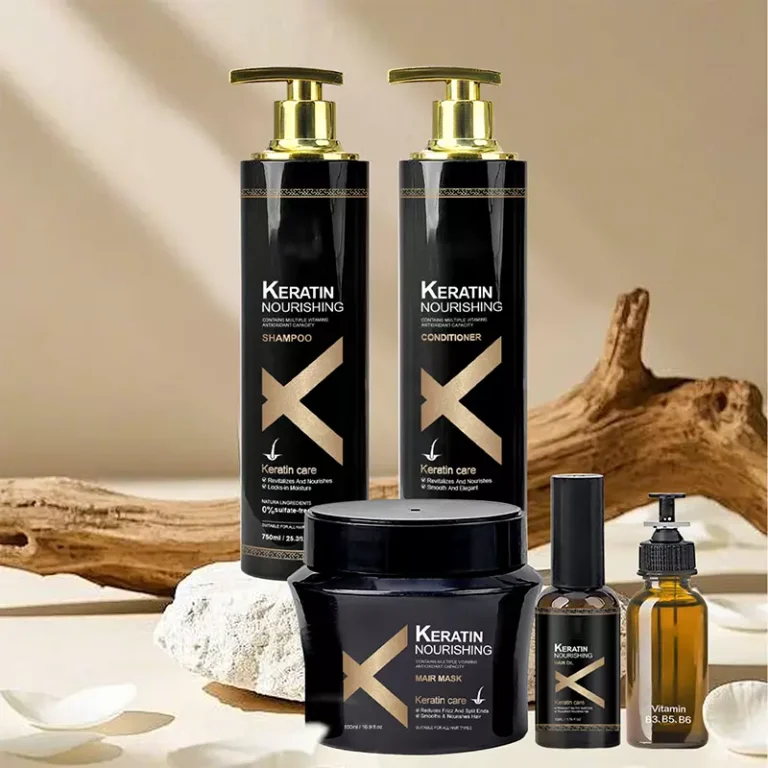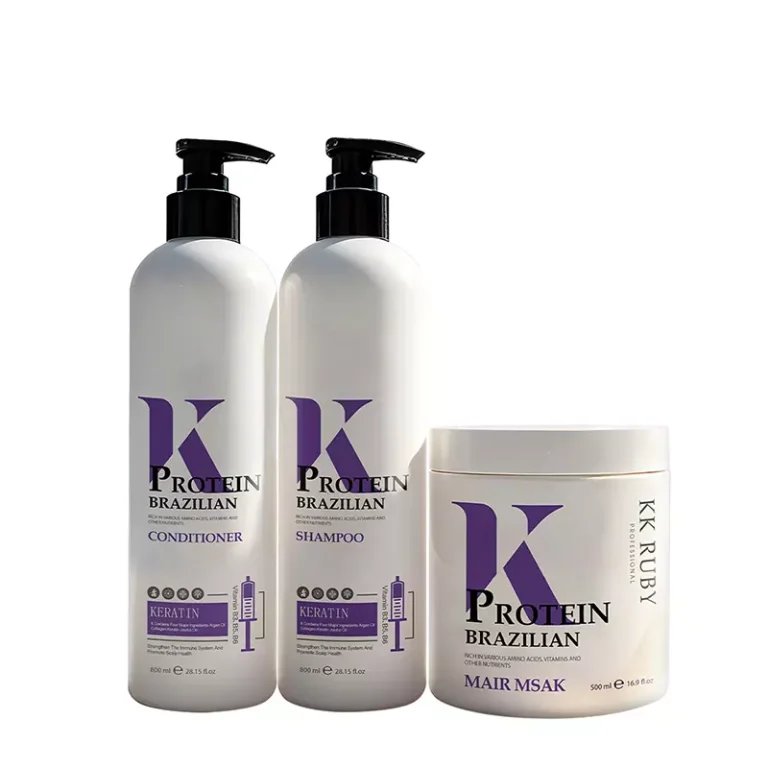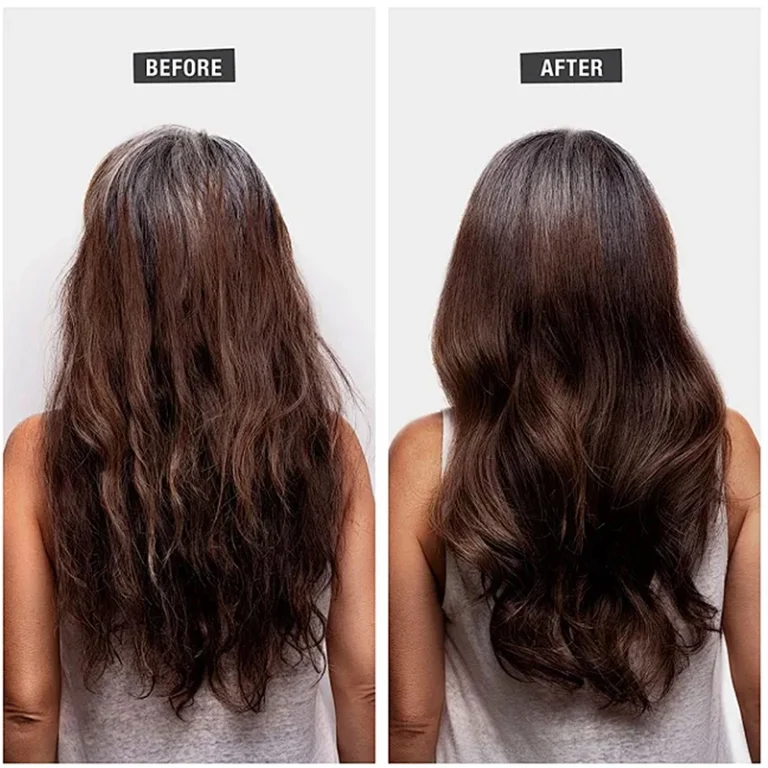
In the fiercely competitive hair care market, a brand’s core competitiveness stems not only from product positioning and marketing but also relies heavily on the support of its back-end production system. Shampoo OEMs/ODMs, as a key link in the industry chain, lower barriers to entry, improve efficiency, and accelerate growth for brands through professional, large-scale, and digital operations. Taking Guangzhou Jindao Cosmetics Co., Ltd. as an example, as a rising star in the industry, its operating model precisely embodies the typical value of shampoo OEMs in empowering brand growth, providing a referable cooperation model for small and medium-sized brands and emerging entrepreneurs.
I. R&D Empowerment: Shortening Product Iteration Cycles and Building Differentiated Competitiveness
For most brands, independent R&D faces challenges such as high costs, long cycles, and high technological barriers. Jindao leverages its core advantages of “technology development + raw material integration” to provide brands with a one-stop service from formula development to sample prototyping, effectively solving this pain point.
As a company focusing on biotechnology and cosmetics, Jindao specializes in shampoo formula R&D. Combining market trends and consumer demands, it has built a formula library covering affordable options, functional products (such as anti-hair loss and oil control), and natural ingredients. Leveraging its qualifications in purchasing and selling locally sourced Chinese herbal medicines, Jindao can precisely integrate core raw materials such as plant extracts to customize natural and gentle shampoo formulas for brands, aligning with the current trend of “ingredient-conscious” consumers. Simultaneously, Jindao provides free sampling and formula optimization services. Brands can obtain samples meeting their needs within 48-72 hours without investing in a dedicated R&D team, shortening the product development cycle from concept to reality by more than 60%. This helps brands quickly respond to market changes and seize opportunities in niche markets. This “on-demand customization + rapid iteration” R&D model is the core embodiment of how shampoo contract manufacturers inject innovative vitality into brands.
II. Flexible Production System: Adapting to Diverse Order Demands and Achieving Efficient Mass Production
Brands have differentiated production needs at different stages of development: the initial stage requires small-batch trial production to verify the market; the growth stage requires large-scale mass production to ensure supply; and the mature stage may require rapid replenishment of multiple categories in small batches. Jindao’s flexible production operation model adapts to the production needs of brands throughout their entire lifecycle, achieving efficient production.
Combining with the industry trend of flexible production, Jindao adopts a modular production line design, supporting small-batch orders starting from 1,000 bottles, while also possessing large-scale mass production capabilities, ensuring a seamless transition from trial production to mass production. For startup brands, small-batch trial production significantly reduces inventory risk and initial investment, helping brands validate market feedback at low cost. For growing brands, by optimizing production processes and improving equipment utilization, delivery cycles are controlled to 7-10 days, 30% shorter than the industry average, ensuring timely response to end-sales demands and avoiding stockout losses. Furthermore, leveraging Guangzhou’s mature daily chemical industry chain resources, Jindao can integrate packaging design, raw material procurement, logistics and distribution, achieving integrated “production + supporting services” delivery, further improving brand operational efficiency. This “flexible adaptation + efficient delivery” model perfectly solves the production dilemma of brands facing difficulties in fulfilling small orders and ensuring large orders.
III. End-to-End Compliance Guarantee: Reducing Brand Operation Risks and Building Market Trust
As a cosmetic product, shampoo must strictly comply with the National Medical Products Administration’s standards, industry standards, and import/export regulations. Compliance is the bottom line for a brand’s survival. Jindao, with its standardized operating qualifications and process control, builds an end-to-end compliance barrier for brands, reducing operational risks.
Jindao possesses complete operating qualifications covering cosmetics retail, technology import/export, and goods import/export. Its production processes strictly adhere to the “Cosmetics Supervision and Management Regulations” and the GB/T 29679 industry standard, ensuring product quality meets standards. For brands with overseas expansion needs, Jindao can assist in connecting with international compliance standards, providing production and testing services that meet FDA and EU GMP requirements, helping brands successfully expand into overseas markets. Simultaneously, it has established a dual system of raw material traceability and finished product quality inspection, controlling raw material safety from the source. Each batch of products provides a quality inspection report, ensuring brand products are traceable and free from compliance risks. This “compliance safety net” service value allows brands to focus on brand operation and marketing without investing heavily in production compliance management, achieving asset-light growth.
IV. Digitalization and Cost Optimization: Enhancing Profit Margins and Accelerating Brand Growth
The core of efficient production is cost reduction and efficiency improvement. Jindao leverages its advantages in digital management and large-scale procurement to optimize cost structures for brands, enhance profit margins, and help brands achieve large-scale growth.
In terms of digital management, Jindao introduces basic digital production management tools to monitor production processes, raw material inventory, and order progress in real time, reducing human error, improving production efficiency, and lowering unit product production costs by 15%-20%. Simultaneously, relying on its advantages in large-scale raw material procurement, it can integrate high-quality supplier resources to provide brands with cost-effective raw materials, further reducing costs. For brands, cost optimization directly increases product profit margins, allowing them to invest more funds in marketing and brand building. In addition, Jindao provides supporting services such as advertising design and online sales to assist brands in building online sales channels, forming a synergistic “production-marketing” empowerment that accelerates brand market expansion.
V. The Symbiotic Growth Path of Shampoo OEMs and Brands Under Industry Trends
Currently, the shampoo market is evolving towards three major trends: digital production, natural ingredients, and personalized customization. The role of shampoo OEMs has upgraded from “simple processing” to “brand growth partners.” Jindao’s operating model is a typical example of this trend—focusing on R&D, supported by flexible production, adhering to compliance, and driven by digitalization, providing brands with end-to-end empowerment.
For brands, choosing a high-quality shampoo OEM is not simply “outsourcing production,” but rather leveraging the OEM’s expertise to compensate for their own shortcomings, achieving resource focus and efficient growth. The value of OEM companies like Jindao lies not only in providing high-quality production services to brands, but also in lowering entry barriers, accelerating product iteration, and optimizing cost structures through supply chain integration and technological innovation, allowing brands to operate with less burden in fierce market competition.
In the future, as competition in the hair care market intensifies, the symbiotic relationship between shampoo OEMs and brands will become even closer. Only by accurately grasping market demand and continuously upgrading service capabilities can contract manufacturers truly become the core engine for efficient production and growth of brands, achieving win-win development for both parties.